Dive Brief:
- A Republican-backed measure that would require the U.S. Department of Education to screen federal financial aid applicants for potential identity fraud passed the House on Wednesday in a 249-172 vote.
- Three dozen Democrats joined Republicans in voting for the measure. The bill would largely codify a fraud detection system for the Free Application for Federal Student Aid that the Education Department launched in April. Under that system, applicants deemed a high fraud risk must show their government-issued IDs before they can receive federal financial aid.
- The legislation, called the No Aid for Ghost Students Act, is aimed at reports of scammers using fake identities to apply and enroll in higher education institutions — often community colleges — in order to steal federal financial aid.
Dive Insight:
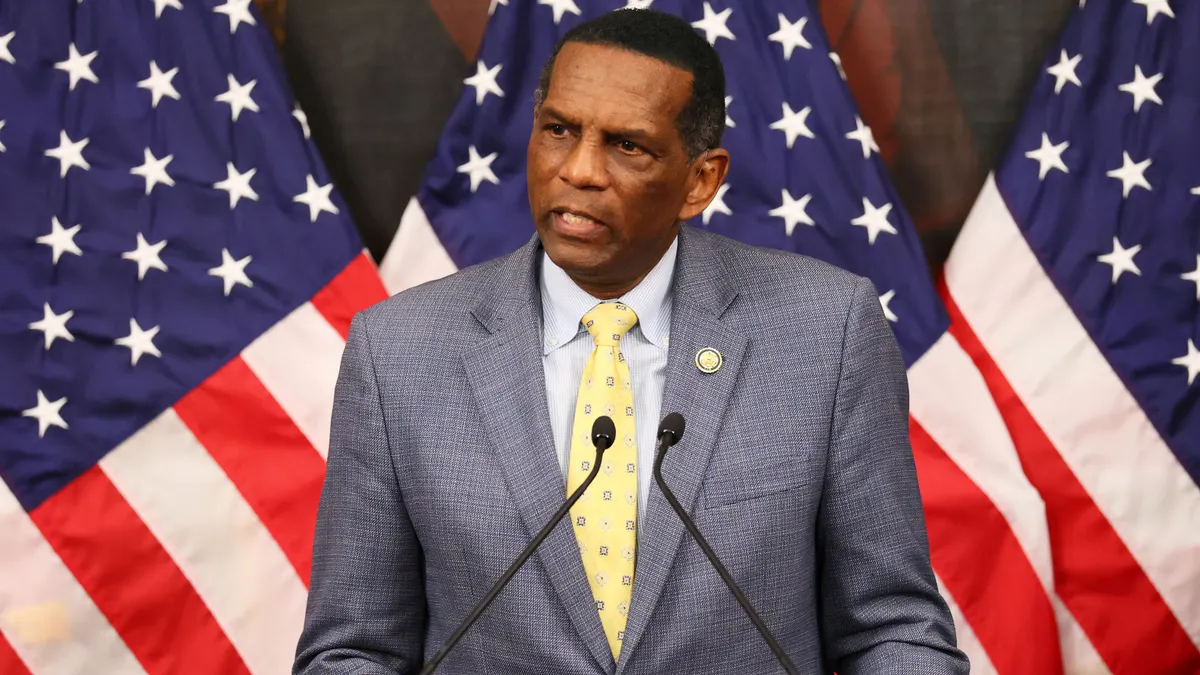
Rep. Burgess Owens, a Utah Republican who introduced the legislation, praised the fraud detection efforts the Education Department has already put in place.
“The No Aid for Ghost Students Act makes those protections permanent, helping ensure that federal student aid goes to real students working to further their education — not scammers gaming the system,” Owens said in a Wednesday statement.
Fraudsters have stolen millions from colleges by pretending to be real students. In the first quarter of 2026, the 116 institutions in the California Community Colleges system disbursed more than $1.9 million in financial aid to fake students, according to documents obtained from EdSource. And the system has lost $30 million due to the issue since 2024.
The Education Department began ramping up fraud detection efforts last year. That June, the agency told colleges it would temporarily require them to verify the identities of roughly 125,000 first-time federal financial aid applicants while it developed a permanent screening process.
That process was key to ensuring financial aid didn’t go “out the door to fraudsters,” FAFSA Program Executive Director Aaron Lemon-Strauss said during an higher education conference in February. The department also flagged tens of thousands of students for verification in August.
In December, the Education Department said the measures helped prevent $1 billion in federal financial aid fraud. They also helped train the department’s system for identifying potential fraudsters, Lemon-Strauss said in February.
The Education Department’s formal fraud detection system that debuted in April requires students flagged as high risk to verify their identities through the online FAFSA form. They are asked to present their IDs and take a picture during a live camera check.
If students can’t complete this step, they must verify their identities in person at their institutions.
Virginia Rep. Bobby Scott, the top-ranking Democrat on the House’s education committee, raised concerns during Wednesday’s floor debate about students incorrectly flagged as potential fraudsters.
“The bill prohibits colleges from distributing funds to those students until the suspicion is cleared up,” Scott said. “These students could face hardships obtaining housing, transportation, or even buying books for who knows how long.”
While he voiced support for fraud detection efforts, he argued that lawmakers didn’t yet know whether the department’s system was working.
“That system is still being tested, and Congress has not yet seen meaningful evidence about its effectiveness or its impact on students,” Scott said. “Yet this legislation would rush to codify requirements and penalties before we know whether the department's current efforts are even working.”
A companion bill was introduced in the Senate in April.