Dive Brief:
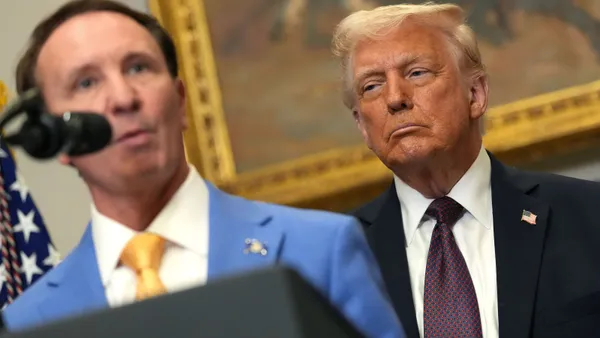
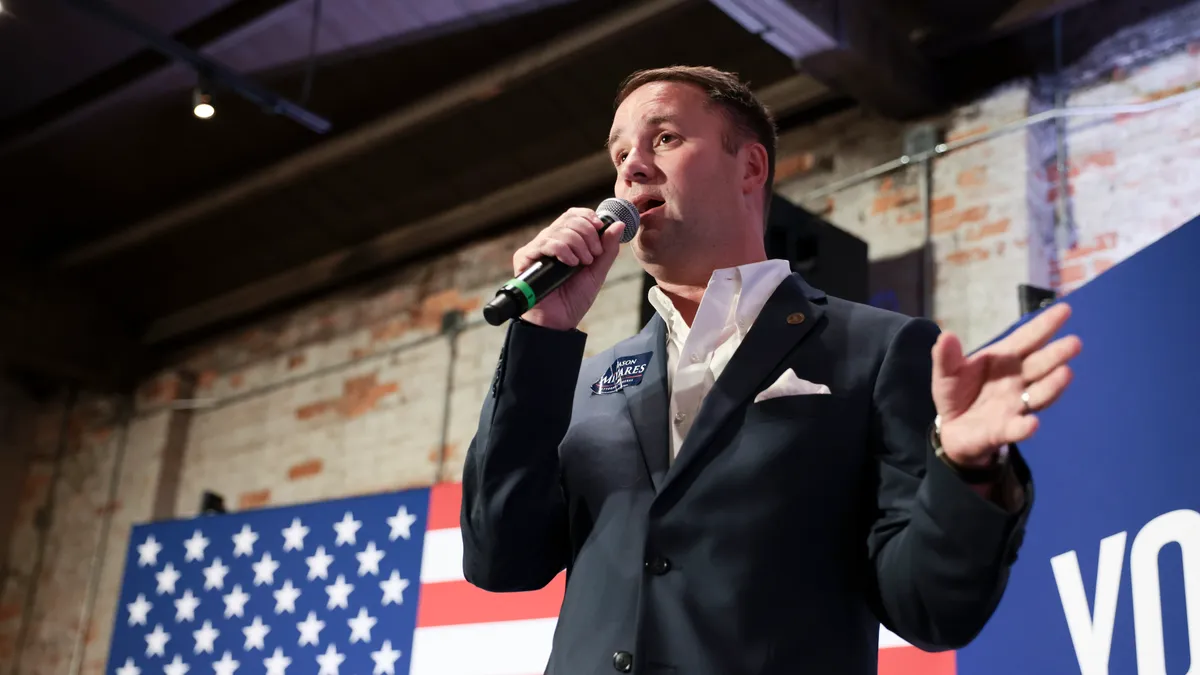
- Virginia Attorney General Jason Miyares has joined with the U.S. Department of Justice in seeking an end to a state law allowing certain undocumented students to pay in-state tuition.
- Miyares, a Republican who will leave office next week, filed a joint motion with the DOJ seeking to strike down his state's law on Dec. 30, the day after the agency sued Virginia over the matter. Miyares' decision quickly drew scorn from student advocates and incoming Democratic Virginia officials.
- The DOJ's lawsuit made Virginia the seventh state the Trump administration has challenged over in-state tuition laws benefiting undocumented students.
Dive Insight:
In 2020, then-Gov. Democrat Ralph Northam signed a law allowing undocumented students in Virginia to receive in-state tuition benefits at public colleges if they:
- Attended a Virginia high school for at least two years.
- Graduated or received a GED in July 2008 or later.
- Submit state income tax returns from themselves or their parents or guardians for at least two years prior to registration or enrollment.
Virginia is home to some 13,000 undocumented residents enrolled in higher education, according to the Higher Ed Immigration Portal.
U.S. Attorney General Pam Bondi on Dec. 30 announced the DOJ would seek to overturn Virginia's law, arguing that it illegally offers undocumented students benefits not provided to all U.S. citizens.
Miyares quickly moved to support the DOJ's lawsuit by filing the joint motion. U.S. District Judge Robert Payne, a George H. W. Bush-era appointee assigned to the case, has yet to sign off on the motion.
Civil rights and student advocates are seeking to keep it that way.
On Dec. 31, the American Civil Liberties Union of Virginia and the Legal Aid Justice Center filed an emergency motion challenging the proposal from Miyares and the DOJ. They did so on behalf of the Dream Project, a Virginia nonprofit offering scholarships and mentoring to undocumented students.
Sophia Gregg, senior immigrants’ rights attorney at ACLU-VA, said Miyares had "abandoned his duties to defend Virginia law."
“Attorney General Jason Miyares has sided with the Department of Justice — intentionally working in secrecy and over a holiday weekend — to manufacture a predetermined outcome to deprive Virginian students of not only their futures but their day in court," Gregg said in a Dec. 31 statement.
Likewise, the Legal Aid Justice Center said that Miyares' surrender had left "students with no voice in court," an argument the groups repeated in their motion.
Jay Jones, Virginia's attorney general-elect, condemned the DOJ's lawsuit as "a deliberate attempt to beat the clock to prevent a new [state] administration from defending them."
"This is the exact kind of federal overreach Virginians rejected in November," Jones, a Democrat, said in a Jan. 1 social media post. "My team is reviewing all legal options available to the Commonwealth."
Miyares publicly addressed his decision for the first time later that day and doubled down.
"Rewarding non-citizens with the privilege of in-state tuition is wrong and only further incentivizes illegal immigration," he said in a social media post.
Average in-state costs for Virginia public colleges are well above the national average — $14,825 versus $9,750 in 2022-23 — according to the Education Data Initiative.
At the University of Virginia, tuition varies by which college students enroll in and how far along in their studies they are. But out-of-state undergraduate students consistently pay more than triple the tuition of their in-state peers.
For example, the state flagship's College of Arts and Sciences in 2025-26 charged first- and second-year undergraduates with in-state residency $16,258 in tuition. Out-of-state students in the same situation paid $55,436.
At Virginia Tech, in-state undergrads paid $13,548 in 2025-26, while those from out of state paid $35,408. The difference, though less pronounced, is also significant at other public colleges in the state.
In addition to Virginia, the DOJ has sued six states over their laws granting certain undocumented students eligibility for in-state tuition: California, Illinois, Kentucky, Minnesota, Oklahoma and Texas.
Officials in some states, like Democratically controlled California, have sworn to fight the DOJ in court. Others, like Republican Texas Attorney General Ken Paxton, paved the way for Miyares.
Like Virginia’s outgoing attorney general, Paxton worked with the Trump administration to have a federal judge strike down his state’s decades-old law offering in-state tuition rates to undocumented students.
Paxton has served as Texas’ attorney general for four terms and is not eligible to run again. Instead, he is running for a seat in the U.S. Senate, a move he foreshadowed in 2023.