Dive Brief:
- Gen Z’s negative sentiment toward artificial intelligence has grown over the past year, and many are concerned about it harming their learning, according to a Thursday survey from Gallup, the Walton Family Foundation and GSV Ventures.
- Anger over AI is increasing among Gen Z at the same time excitement is fading. Nearly one-third of the survey’s respondents, 31%, said AI makes them feel angry, up 9 percentage points from last year. And just 22% said the technology makes them feel excited, down from 36% the prior year.
- Among K-12 students, 74% said it is “very” or “somewhat” likely that AI designed to complete tasks quicker “will make learning more difficult in the future.” That share was even higher among Gen Z adults, with 83% of respondents sharing that view.
Dive Insight:
Gallup’s new survey comes as AI companies are making vast investments into higher education.
Google announced last year that it would spend $1 billion to provide AI tools and training to colleges and nonprofits. Over 200 colleges have signed up for the Google program so far, ranging from Ivy League institutions like University of Pennsylvania to large public systems such as Texas A&M University.
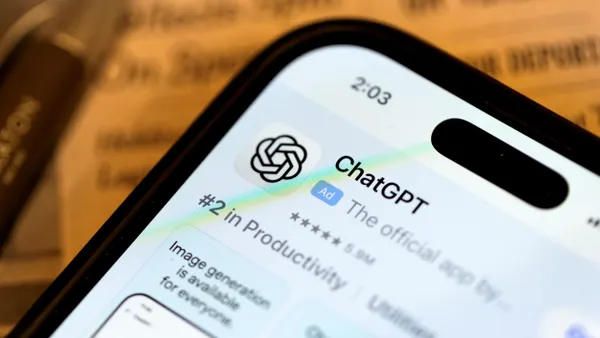
Large universities and systems — including Arizona State University, the University of South Carolina and California State University — have also been striking deals with OpenAI, the maker of ChatGPT, to give students and employees access to the company’s tools.
Against this backdrop, Gallup polled over 1,500 Gen Z students and adults ages 14 to 29 between late February and early March to understand their views on AI.
The new survey found that AI adoption is slowing among Gen Z. Just over half of Gen Z members, 51%, use AI each week, representing just a 4 percentage point increase over last year.
However, 52% of Gen Z K-12 students agreed that they will need to know how to use AI if they attend college.
Still, Gen Z is becoming more skeptical about whether AI will aid their learning.
Fewer than half of overall respondents, 46%, agreed that AI tools can help them learn faster, down from 53% who said the same last year.
Part of the growing negative sentiment may stem from concerns about AI’s impact on the workplace, according to Gallup’s report. Nearly half of respondents, 48%, said the potential risks of AI outweigh the benefits in the workplace, a sharp uptick from 37% who said that last year.
“Gen Z isn’t rejecting AI outright, but they are reassessing its role in their lives. What we’re seeing in the data is a generation that recognizes AI’s utility but is increasingly concerned about its long-term impact on learning, trust and career readiness," Stephanie Marken, senior partner at Gallup, said in a Thursday statement. "Their growing skepticism signals a need for more thoughtful integration of these tools in both school settings and the workplace.”
Concerns about AI have also been mounting in the higher education sector. At Cal State, faculty are urging the system’s chancellor not to renew its $17 million contract with OpenAI, which expires at the end of June.
In a petition that had garnered over 3,400 signatures as of Thursday afternoon, they argue that ChatGPT Edu, the version built for colleges, is largely the same as the free online version, doesn’t provide accurate answers to student questions, and harms teaching and learning.