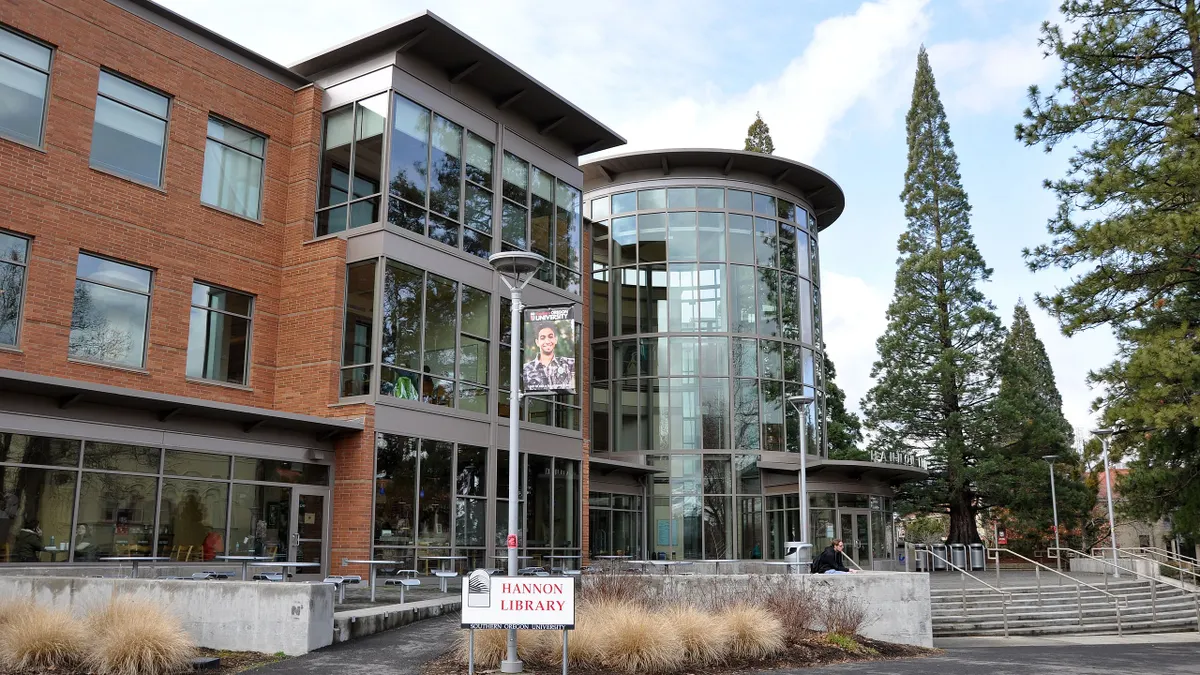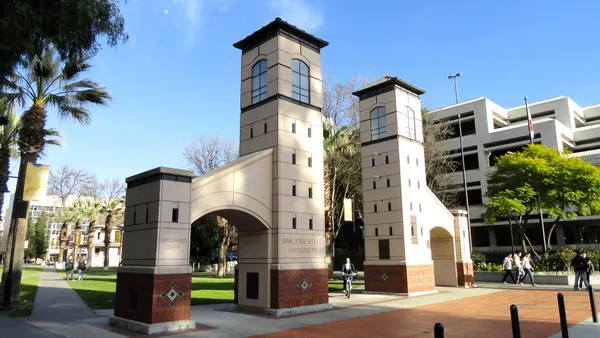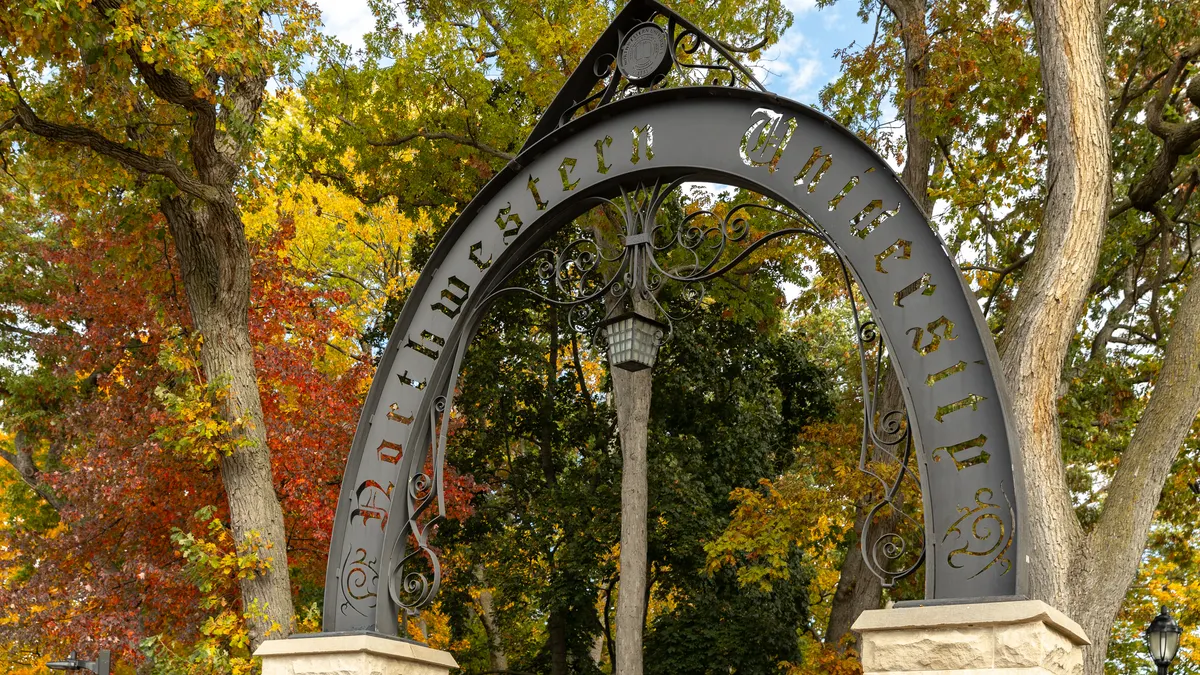
Northwestern University’s “Black Friday” agreement to pay $75 million to the Trump administration in exchange for regaining access to about $790 million in federal research funding raises free speech concerns, experts say.
As part of the deal, announced Nov. 28, Northwestern “may not use personal statements, diversity narratives, or any applicant reference to racial identity” in order “to justify discrimination” in the admissions process.
The agreement also bans on-campus displays — including banners, flyers and chalking — outside of areas specifically designated by the university, and it prohibits overnight demonstrations in any university location.
In addition, it cancels an agreement reached with pro-Palestinian protesters last year and reverses all policies that were implemented as part of it, including a commitment to create a dedicated space for Muslim and North African students.
Under the terms, Northwestern University officials also agreed to certify to the Trump administration the university’s ongoing compliance with the deal.
“Northwestern has allowed its institutional judgment in terms of academic freedom, in terms of student speech, in terms of admissions criteria... to be overriden by the demands of the federal government, and that raises serious First Amendment problems,” said Northwestern law professor Heidi Kitrosser, a constitutional law expert.
Early in December, Kitrosser co-authored a statement contending that the government cannot withhold federal funds to micromanage recipients’ speech.
In a video statement announcing the agreement, Northwestern Interim President Henry Bienen denied the university had surrendered its academic freedom or autonomy.
“I would not have signed anything that would have given the federal government any say in who we hire, what they teach, who we admit or what they study,” Bienen said. “Put simply, Northwestern runs Northwestern.”
But longtime constitutional lawyer and Northwestern alumnus Stephen Rohde vehemently disagreed. Calling the agreement “a sad day for higher education,” Rohde said the university had given up its independence.
“It’s a shocking intrusion. They’ve tied their hands with respect to their students by not being able to modify their own policies,” Rohde said.
Kevin Goldberg, vice president at the nonpartisan Freedom Forum, an association that defends First Amendment rights, said the Northwestern agreement was not written precisely enough to withstand First Amendment scrutiny and cited a recent federal court ruling in another case to bolster his point.
“We’ve seen at Indiana University there was a restriction on overnight demonstrations that was struck down as violating the First Amendment. So these are things that really raise questions,” said Goldberg, noting the similar restriction in Northwestern’s deal.
‘At the barrel of a gun’
Going forward, Goldberg suggested that it is an open question whether individuals can bring a First Amendment challenge against the university or only the government.
While Northwestern is a private entity and not directly subject to the First Amendment, Goldberg said it was not acting as a private university because the federal government coerced Northwestern into the agreement to regain its federal research funding.
Kitrosser expressed a similar sentiment. “Even if the agreement was solely a product of Northwestern’s private choices, it would raise troubling free speech concerns from a policy perspective. But what is of greater concern is that Northwestern clearly made the deal at the barrel of a gun.”
In a statement issued when Northwestern cut the deal, Assistant Attorney General Harmeet Dhillon said universities receiving federal funding have responsibilities to protect against discrimination and antisemitism, and that the government was “gratified to reach an agreement that safeguards the rights of all the university’s applicants, students, and employees.”
Ironically, the Supreme Court’s 2024 ruling in the gun rights case of National Rifle Association of American v. Vullo may provide the strongest support for future First Amendment challenges to the agreement, according to Kitrosser.
In that case, the NRA sued the former superintendent of New York’s Department of Financial Services, alleging she pressured insurance companies and financial institutions to cease doing business with the advocacy group.
“You had someone in state government basically trying to urge people to end affiliations with the NRA because they didn’t like the political activity it had engaged in,” Kitrosser said.
The justices held unanimously that government officials cannot coerce a private party to selectively punish or suppress disfavored speech on its behalf.
The fact that the case involved the NRA, Kitrosser added, shows that speech restrictions cut across ideological boundaries.
“No one side of the political spectrum has a monopoly on being at risk from government coercion,” Kitrosser said.
Similarly, she said, the administration strong-armed Northwestern “by holding its funding hostage” and forcing it to limit students’ ability to engage in protests, to limit faculty speech, and even to restrict the kinds of speech that might be considered in the admissions process.
But attorney Adam White, a senior fellow at the American Enterprise Institute, a conservative think tank, said another recent Supreme Court ruling — issued just a few weeks after the NRA decision — may point in a different direction.
In Murthy v. Missouri, the justices ruled that two states, Missouri and Louisiana, along with a handful of individuals, could not move forward with claims that the Biden administration unlawfully pressured social media companies to take down certain speech.
In that case, according to White, the presence of an intermediate third party complicated matters because it was difficult to tease out what the social media companies had done independently and what was the result of government pressure.
“That’s the kind of complication that students or faculty of Northwestern might run into if they want to claim that they’re being coerced by the government, because is Northwestern being coerced? And, if so, is this effectively coercing the speech of these other people, the protesters on campus, or whoever?”
The Supreme Court sidestepped the broader issue, though, of when the government persuading platforms to remove content becomes unconstitutional censorship.
While making clear he was not speaking of the Northwestern agreement specifically, White said he is wary of the government imposing policy judgments through the threat of funding cuts. But he suggested it is not an entirely new tactic.
“The Obama administration would casually say under Title IX you’re required to adopt certain policies related to sexual orientation and gender. The universities would often go along with them, sometimes over the objections of people on campus,” said White. “You have these really complicated relationships between the universities and the institutions that regulate or fund them.”
‘Riddled with viewpoint-based conditions’
While it remains to be seen if Northwestern’s deal with the Trump administration will trigger a host of lawsuits, Rohde said his alma mater is in for headaches from students, faculty, and alumni.
“This is not a time, place and manner restriction- or content-neutral,” Rohde said. “It’s so riddled with viewpoint-based conditions, and that’s a classic violation of the First Amendment.”
He noted that while Northwestern must conduct mandatory antisemitism training, the deal explicitly revokes a previous agreement with pro-Palestinian protesters that promised to support visiting Palestinian students and faculty.
At the time, the university said in a statement that acts “of antisemitism, anti-Muslim/Arab racism, and hate will not be tolerated.” The repudiated agreement also advised employers not to rescind job offers for students engaging in First Amendment-protected speech.
The Freedom Forum’s Goldberg said, “As a Jewish person, I don’t take allegations of antisemitism lightly. I obviously want campuses free of antisemitism, but I want them to be free of all harassment of all students. It raises questions when you lean so hard into one set of views.”
"It’s so riddled with viewpoint-based conditions, and that’s a classic violation of the First Amendment.”

Stephen Rohde
Retired constitutional lawyer
Some experts also contend the agreement’s admissions restrictions go beyond the limits that the Supreme Court established in its 2023 ruling in Students for Fair Admissions v. Harvard.
While the justices struck down race-conscious admissions in that case, Kitrosser noted, “They specifically said, for example, there’s no reason a student could not write about, and that an admissions board could not consider, how a particular individual was impacted by their race growing up.”
But the Northwestern agreement’s sweeping language said the university cannot consider “proxies for race, including in the form of admissions statements or essays” which, according to Kitrosser, goes further than what the Supreme Court intended and could suppress speech.
Apart from admissions, another free speech concern involves how the agreement might affect faculty and students in the classroom because of the Justice Department’s ongoing reporting and monitoring requirements. For instance, one provision requires the university to show the DOJ all complaints received by the university’s civil rights office.
“With this increased focus on complaints, it’s going to have a chilling effect on professors and what they say in class when it comes to certain subjects,” said Goldberg. “That doesn’t necessarily mean it violates the First Amendment, but action based on those complaints could.”
Those complications aside, Rohde said Northwestern had a clear blueprint to follow from Harvard’s lawsuit against the government over its efforts to withhold federal funding. A federal judge handed Harvard a victory in September, ruling the Trump administration had violated the university’s First Amendment rights in freezing its funding.
It’s exactly what Northwestern should have done,” said Rohde. “They should have photocopied the Harvard complaint and tailored it to Northwestern.”