The University of North Carolina's board of governors unanimously approved a new — and much-contested — systemwide definition of academic freedom on Thursday. The change came amid protests from faculty and followed a series of high-profile news stories centered on the public system’s operations.
UNC's new policy defines academic freedom as "the foundational principle that protects the rights of all faculty to engage in teaching, research/creative activities, service, and scholarly inquiry without undue influence."
But it also notes that "academic freedom is not absolute" and includes a number of examples of what is covered — and not covered — by the policy.
Commonly held definitions help us all share the same reality.

Peter Hans
President of the University of North Carolina
UNC faculty, for example, are protected by academic freedom to teach and research "controversial or unpopular ideas related to the discipline or subject matter." But they are not protected if they teach content that "lacks pedagogical connection to the course, discipline, or subject matter."
The definition UNC's board approved differed slightly from the one advanced by a committee in January.
For instance, the line requiring a “pedagogical connection” previously stated that faculty would not be protected by academic freedom if they taught content “clearly unrelated to the course description or unrelated to the discipline or subject matter.”
In another section, a line that sought to "ensure that faculty activities support the university's mission" changed to say such activities need only "align with" that mission.
Andrew Tripp, UNC's general counsel, said during Thursday's meeting that the revisions came out of an effort to be more precise and to incorporate feedback received after the draft was circulated "to administrators, provosts, attorneys, and anyone in the wider world who cares to comment."
UNC's new policy also establishes students' rights under academic freedom.
Students are responsible for learning the content their teachers assign to them but "are free to take reasoned exception to concepts and theories presented in their classes."
System support, faculty scorn
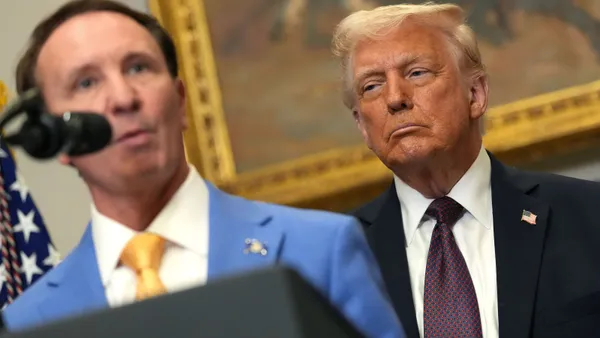
During Thursday's board meeting, UNC President Peter Hans supported the proposed definition of academic freedom. It includes "reasonable practical guidance" on balancing academic liberties with professional responsibilities and "how the rights and privileges of faculty exist alongside those of students," he said.
"Commonly held definitions help us all share the same reality," Hans said. "By strengthening the UNC system code to include more detail about the purpose and the parameters of academic freedom, we hope to make it easier for everyone to appreciate the privileges and the obligations that come with serving our public universities."
Hans also noted that UNC has further sought to strengthen its free expression policies by "adopting a posture of institutional restraint — keeping administrators out of political commentary — so faculty and students have greater freedom to debate and dissent."
But the North Carolina Conference of the American Association of University Professors vehemently opposed the definition as written.
The imprecise language in this policy will open the UNC System to lawsuits when faculty are retaliated against or fired.
North Carolina Conference of the American Association of University Professors
Belle Boggs, president of AAUP NC, cited the example of students' right to "reasoned exception" in a January interview with WUNC.
"Reasoned exception — what does that mean?" said Boggs, an English professor at North Carolina State University. "How much is one student who takes 'reasoned exception' for example to climate change able to derail a class that centers on climate change?"
AAUP NC members protested outside of Thursday's meeting, holding signs that read "Table The Vote!" and "Education Not Censorship."
They also delivered a petition calling for the board to reject the proposed change.
"These revisions to the UNC System Code will chill speech on campus and lead to more retaliation against faculty teaching or discussing politically contentious topics," said the petition, which had over 1,350 signatures as of Thursday afternoon. "The imprecise language in this policy will open the UNC System to lawsuits when faculty are retaliated against or fired."
Instead of delaying the vote, however, the UNC board quickly approved the change with minimal discussion.
The national AAUP said afterward in a social media post that the approved definition will "effectively limit students' ability to fully engage in a variety of scholarly topics & limit open inquiry & academic debate in NC higher education."
In the public eye
UNC has found itself at the center of much public fervor in recent years, something Hans acknowledged Thursday and largely attributed to the proliferation of smartphones and social media.
"It is easier than ever to gin up a mob and harass individuals," he said. "It is easier than ever to put pressure on our institutions, to compromise their principles for the sake of quieting a controversy."
Like other higher ed institutions, the system's universities have faced the proliferation of secretly recorded and heavily edited videos of its employees appearing to depict them discussing how to avoid restrictions on diversity efforts.
Western Carolina University said in June that it would close its Office of Intercultural Affairs after a video of a former employee suggesting continued diversity work went viral. The following month, officials at the University of North Carolina Asheville said the dean of students featured in another secretly recorded video was “no longer employed” there.
And last summer, the right-wing Oversight Project submitted wide-ranging public information requests to UNC's Chapel Hill and Greensboro campuses. The group sought complete course materials for dozens of classes and noted it was specifically looking for content that included over 30 terms such as “sexuality,” “diversity and inclusion,” “implicit bias” and “cultural humility.”
UNC-Chapel Hill declined to fulfill the request, citing instructors’ intellectual property, but UNC Greensboro complied.
Hans and the UNC board addressed the issue in December requiring instructors to post their syllabi to a “readily searchable” online platform beginning in the 2026-27 academic year.
Like the new definition of academic freedom, that change was met with derision by AAUP NC. The faculty group expressed concern over the potential faculty harassment and doxxing such a platform could facilitate and is looking to challenge the syllabus policy in court.