

Major court cases and policy changes in recent years have ushered in a new era of revenue sharing between institutions and players and for athletes to make money off their names, images and likeness.
Since then, many athletes have taken to transferring teams in search of better compensation and colleges are rushing to raise money through donations and game day fees to attract top prospects. Words and phrases like “chaos,” “wild west” and “unsustainable” have been thrown around to describe the state of play.
U.S. senators have used some of that same language to describe the situation, as a bill that would limit revenue sharing and college athlete transfers, among other measures, comes closer to a vote. Last week, the body voted 74-24 to move the Protect College Sports Act closer to a final vote, which is expected as soon as this week.
The bill’s tagline: “End the chaos.”
The proposed legislation has broad bipartisan backing, as well as support from a wide array of higher education and college sports stakeholders.
If passed, the bill would:
- Allow college athletes one transfer to a different institution without losing playing time, though they could have more under certain circumstances, such as head coach changes and discontinued sports.
- Set the age cap at 24 years for college athletes and limit their playing time to five years, while barring pro athletes from playing. (The SEC recently enacted a measure to punish colleges who use pro athletes but is barred by a federal judge from enforcing it for now.)
- Put a cap on revenue sharing between colleges and student athletes, limited to roughly $21 million annually per institution.
- Allow colleges to exceed that cap by an additional $22.5 million to retain players, as well $5 million specifically for athletes in non-revenue-generating programs.
“Across the country, small athletic programs are disappearing, student athletes are left vulnerable to exploitative contracts, and college rosters are being hollowed out by a system that awards excessive transfers,” Sen. John Hoeven, a North Dakota Republican and bill cosponsor, said following last week’s procedural vote.
The legislation, he added, would “establish a common-sense, bipartisan framework to protect competition, restore fairness and bring much-needed stability to college athletic programs.”
But plenty of people have criticized the bill. Stewart Mandel, who spearheads college football coverage for The Athletic, pointed out that it does nothing to cap coaches’ salaries, a prime driver of athletic department budgets, while also allowing for plenty of spending on athletes even with the revenue-sharing cap.
The House has a companion bill to the Senate’s, but Republican House Speaker Mike Johnson has said the body likely won’t vote on it until after the midterm elections.
In the weeks leading up to the Senate vote, news has rolled in about several high-profile college athletics departments facing multimillion-dollar deficits in the new era. Among them:
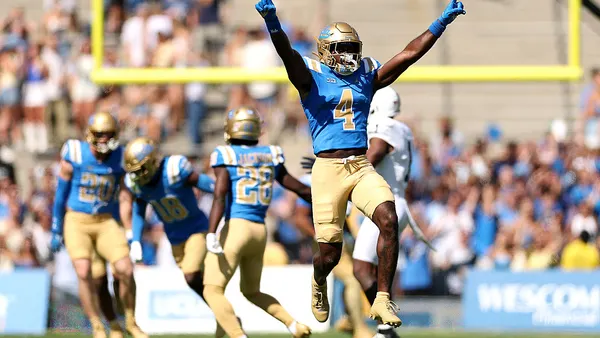
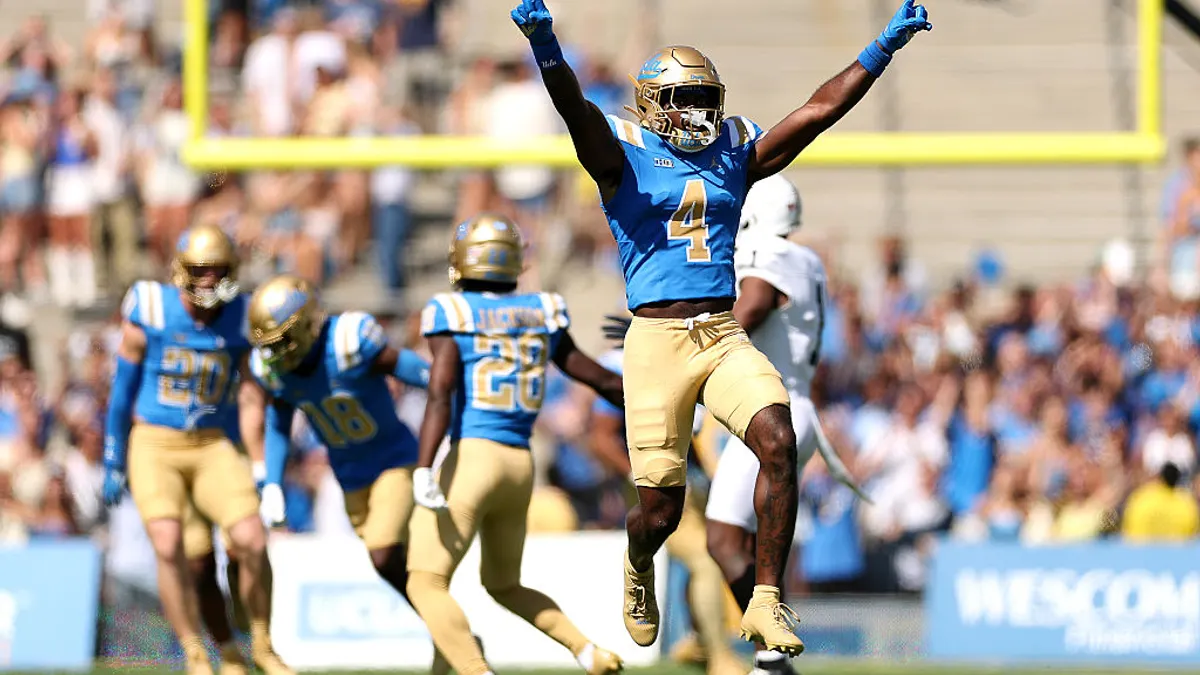
- University of California, Los Angeles carries a deficit of $241.1 million after seven straight years of expenses outpacing revenues, the Los Angeles Daily News reported, citing data from the Knight-Newhouse College Athletics Database. UCLA’s chancellor announced at the end of August that the university would replace its athletics director and acknowledged that “its current path is not sustainable.”
- University of Colorado’s athletics operation projects a $27 million budget as it pays its NFL Hall-of-Famer football coach more than $10 million a year, according to USA Today.
- The University of North Carolina at Chapel Hill racked up a $15 million deficit in fiscal 2025 and is looking to tap a “quasi-endowment” fund to help fuel spending, according to WRAL News.
- The University of Kansas’ athletics board greenlit a $13.2 million budget deficit for fiscal 2027, an improvement over last year’s $15.8 million hole, according to the Kansas City Star.
- The University of Minnesota’s athletics department is facing its second year in a row with a roughly $9 million deficit.
- Leaders at Boise State University in Idaho reported a $2 million athletics deficit for fiscal 2026, but they hope to fill some of their budget gap by milking revenue from tailgaiters in university stadium parking lots, according to business news outlet BoiseDev.
As a July report on athletics compliance from law firm Husch Blackwell put it, “The financial sustainability of athletic departments is increasingly uncertain.”
Meanwhile, a September report from Washington Democrat Sen. Maria Cantwell’s office pointed to over 100 women’s and Olympic sports programs that colleges have folded in what it called an “especially stark consequence of a system in which escalating football expenditures can crowd out opportunities for other student-athletes.”
And across the 2023-24 academic year, 94% of NCAA Division I athletic programs spent more on athletics than the revenue they brought in, according to a July report from the U.S. Government Accountability Office.