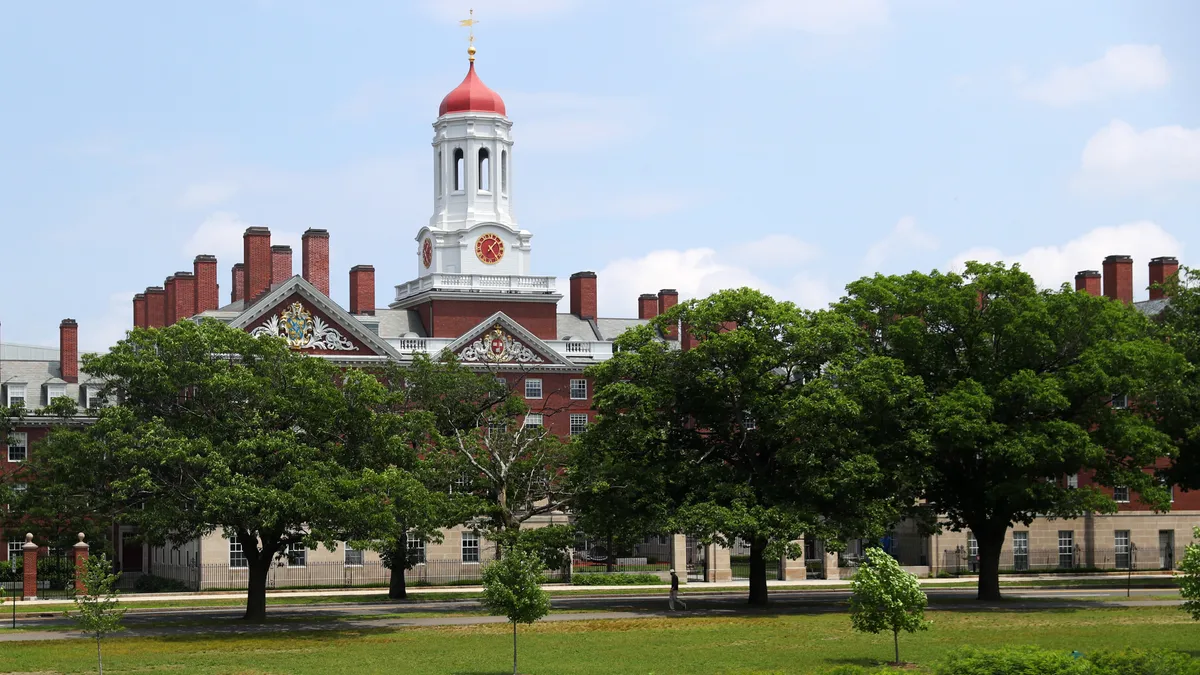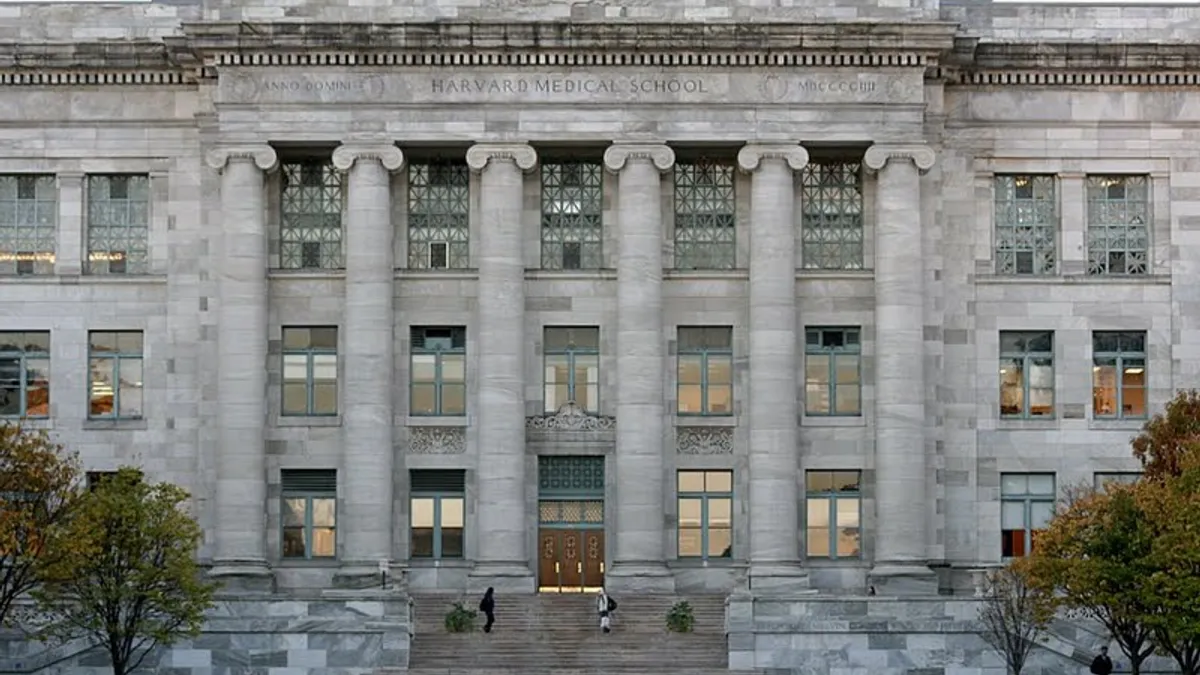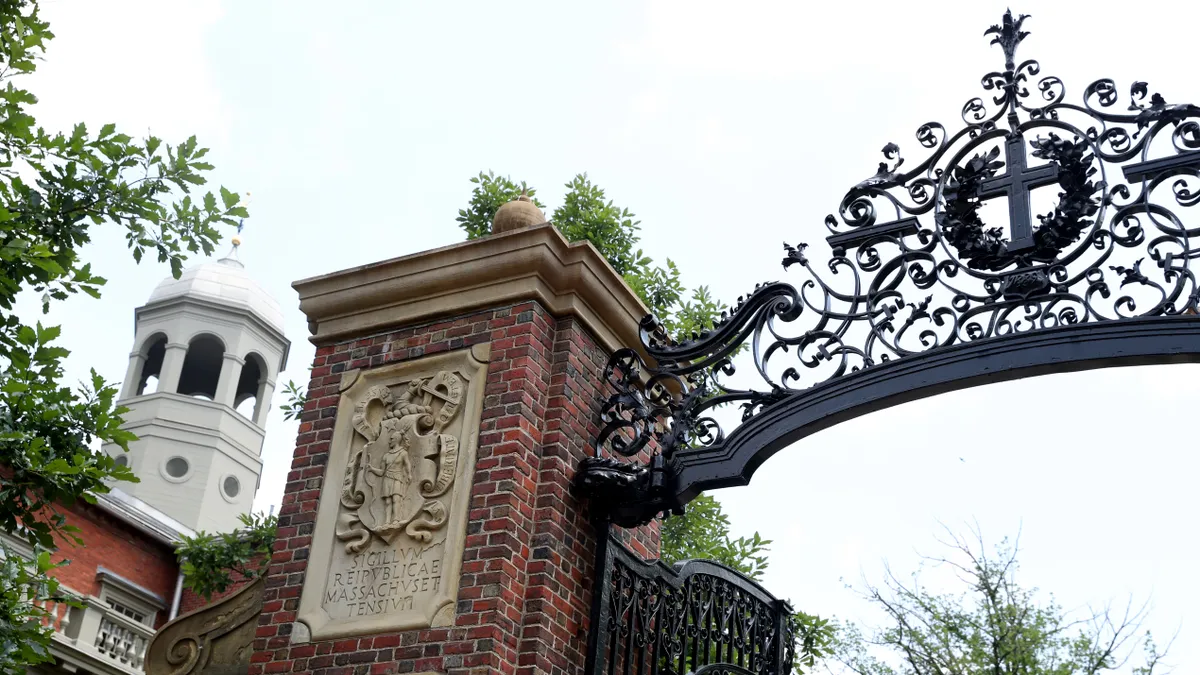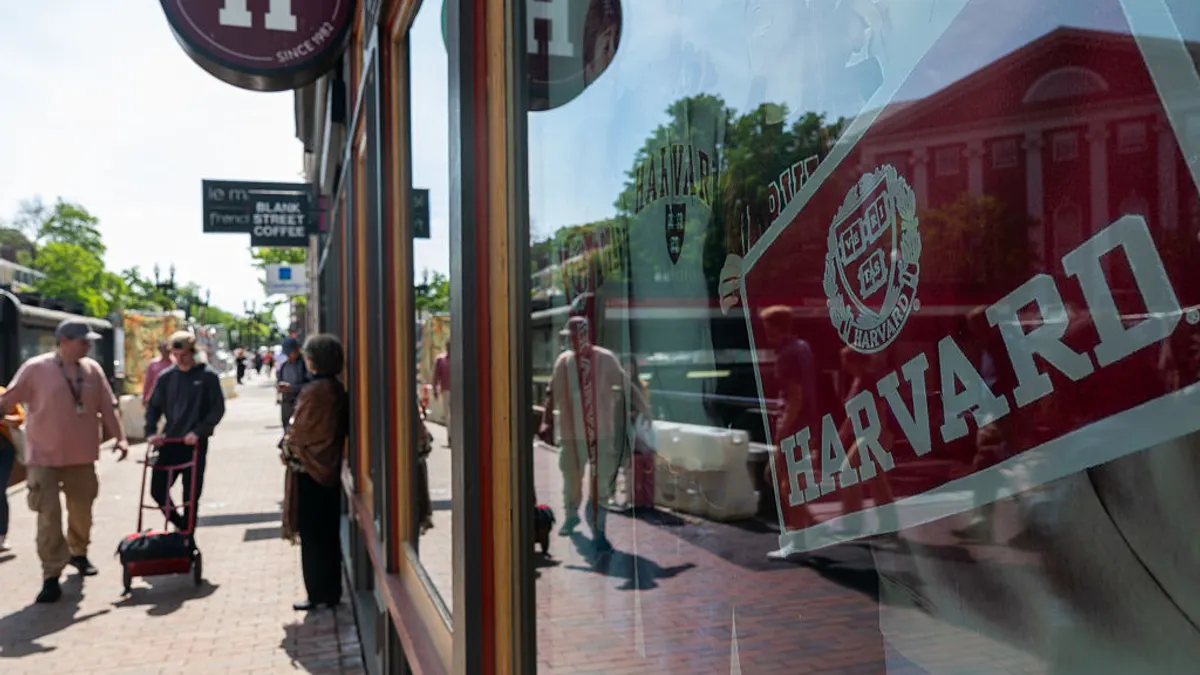
Setting off another high-stakes dispute between the Trump administration and Harvard University, the U.S. Department of Commerce threatened this summer to take control of the Ivy League institution’s patents arising from federal funding.
At stake are patents that could be worth hundreds of millions of dollars.
Commerce Secretary Howard Lutnick sent a letter to Harvard President Alan Garber that took aim at the university’s patent portfolio, accusing Harvard of failing to “live up to its obligations to the American taxpayer.” The letter said the Commerce Department would begin “an immediate comprehensive review” of whether Harvard’s federally funded research complies with the Bayh-Dole Act of 1980.
The Bayh-Dole Act permits universities and other federal funding recipients, including small businesses and nonprofits, to retain patent rights on inventions made with federally funded research. This expansive patent law — aimed at spurring innovation — also includes a “march-in” provision that enables the federal government to force the owners of patents to grant licenses in certain situations. If they refuse, the government can seize control and issue licenses itself.
For instance, this could arise if an entity has not taken effective steps within a reasonable time to make an invention available to the public. Another example involves when action is needed to alleviate health or safety needs.
But in 45 years, no federal agency has ever exercised those march-in rights under the Bayh-Dole Act, and that has experts watching to see whether the Trump administration will take that unheard of step in its battle with Harvard.
“It would be an unfortunate precedent if the administration actually acted on that threat,” said patent attorney Brian O’Shaughnessy, board chair of the Bayh-Dole Coalition. If the Trump administration seized control of Harvard’s patents, it would open the door for future administrations to use march-in rights in ways never contemplated by the statute.
“Businesses should be concerned. Universities should be concerned,” O’Shaughnessy added. “It means there’s that much greater risk in licensing university technology that has been supported in any way by federal funding.”
He also said this federal funding supports innovation, helping students and professors alike to do “great research work” with pharmaceuticals.
The Bayh-Dole Act was intended to incentivize universities, small businesses and nonprofits to commercialize government-funded research. When universities obtain patents, they often grant licenses for their inventions to companies, which in turn pay them royalties.
Stanford law professor Lisa Ouellette, an expert on intellectual property, called the administration’s move “unprecedented,” and said she was confused by the administration’s intentions.
“There’s no articulation of any legal theory. It seems clear there is a political motivation, but it’s not clear this is even an effective way to punish Harvard,” Ouellette said, explaining that many universities don’t make money on their patents. When all costs are factored in, such as paying for faculty time and other expenses, some colleges even lose money.
Commerce Department officials did not respond to requests for comment. Harvard also did not respond to a request for comment but has pushed back against the Commerce Department’s allegations.
‘It’s not what we need right now’
Are march-in rights ever appropriate? When it comes to influencing drug availability and pricing, the answer is a resounding yes, according to Justin Mendoza, executive director for Universities Allied for Essential Medicines’ North American operations.
“If you’re not going to produce this drug in a reasonable way, the government can march in and make sure you do,” said Mendoza.
It could make sense to use march-in rights to stave off a major health crisis, he said. If the federal government were to march in on the intellectual property granted on a prescription drug product, for instance, it could use its power to grant additional licenses to competitors.
“March-in rights can be used to spur competition, bolster generic drug manufacturing markets (including manufacturing jobs) and drive down the costs of medicines all at the same time,” Mendoza explained in an email.
The Biden administration proposed a framework in December 2023 to lower the cost of prescription drugs developed with federal funding and make them more available.
Under the proposal, which the Biden administration ultimately never pursued, federal agencies could have forced federal funding recipients to license their inventions to other parties under Bayh-Dole, including if “the price or other terms at which the product is currently offered to the public are not reasonable.”
Universities are a “pivotal player” in the biomedical pipeline, and most receive some sort of federal funding, Mendoza said. As a result, it’s important for universities to be good-faith partners with industry, and he described government march-in rights as a potential “check on the system” when it comes to affordability and access with drug innovations.
But attorney O’Shaughnessy maintained that Bayh-Dole expressly rejected price controls by the government.
“Patents are not an effective tool to address the pricing of pharmaceuticals,” he said.
Karen Kerrigan, president and CEO of the Small Business and Entrepreneurship Council agreed, and opposed the Biden administration’s 2023 plan to seize patents to control prices.
She also is no fan of the Trump administration’s possible move against Harvard.
“It’s not what we need right now. This is causing a level of heartburn that I don’t think is necessary,” she said. “Investors want certainty. There’s a reason one of the first questions on Shark Tank is always, ‘Do you have a patent for this?’”
Bayh-Dole leveraged the nation’s universities to drive growth under a public-private partnership, Kerrigan said, adding that government ownership of university patents would bring its own set of problems and discourage investment.
“If there’s a university violating the law, then the government should march in, but we haven’t seen that,” Kerrigan added.
Mendoza echoed those sentiments, arguing that the administration’s maneuver seemed like an abuse of Bayh-Dole.
“If they were getting specific and discovered a key ingredient in a major product with prescription drugs in Harvard’s [patent] portfolio is overpriced or in short supply, then march-in rights could apply and the government could step in,” he said.
But Mendoza said Lutnick’s letter to Harvard lacked specificity. “What we’re seeing is the Department of Commerce has a pretty big stick, and we can whack you with it,” Mendoza said.
What should colleges do?
While the administration’s latest salvo is limited to Harvard as of now, experts say other universities need to take note.
According to Stanford’s Ouellette, universities must be wary of broad attacks on their academic research.
“Universities should do more to show, in concrete ways, how their research serves the public — and be clear that they’ll challenge unlawful interference with the academic freedom that makes this research possible,” Ouellette said.
Kerrigan said that if university officials are complying with the patent law, they shouldn’t have reason to worry. But, she added, the government telling universities “If you take this money, we want a cut,” is a big problem for incentivizing new inventions in the marketplace.
For his part, O’Shaughnessy said Bayh-Dole contributes to the robustness of the U.S. higher education system by drawing the best minds to American universities.
“We’re the envy of the world when it comes to innovation,” O’Shaughnessy said. “You can’t mess around with that formula.”