

Dive Brief:
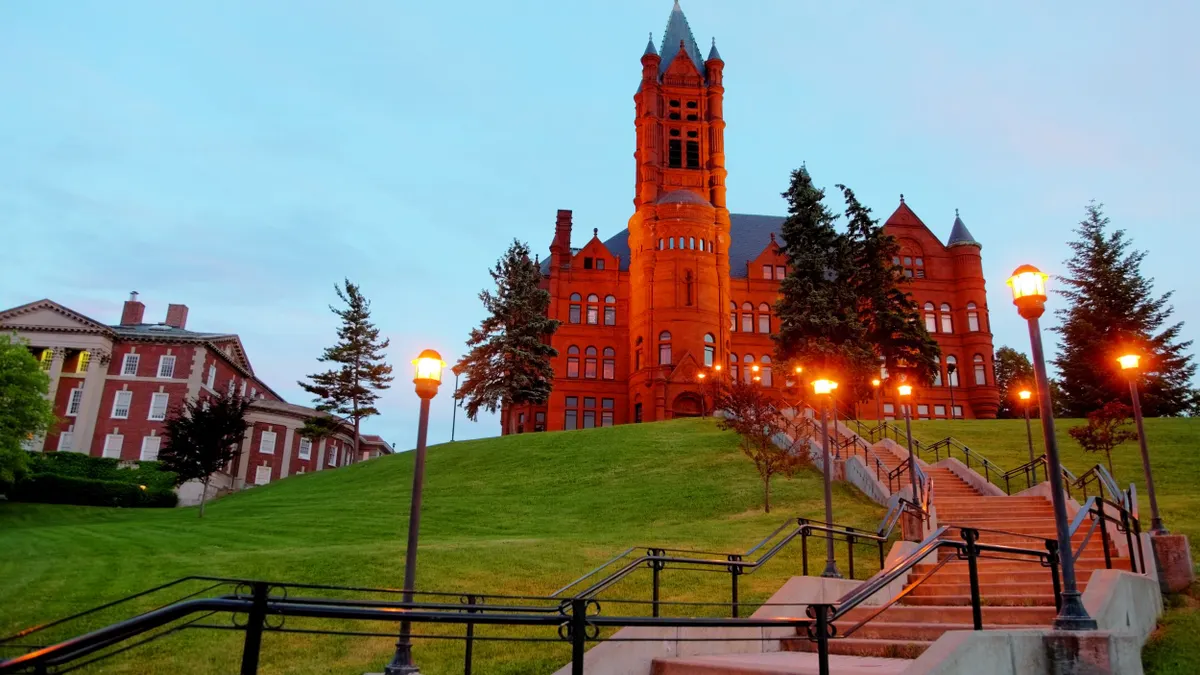
- Syracuse University expects to miss its enrollment targets for the upcoming fall semester, Chancellor J. Michael Haynie said Thursday in a message to the private New York institution’s faculty and staff.
- “Because undergraduate tuition is the University’s primary source of revenue, the Fall 2026 enrollment shortfall carries real financial consequences — including a budget deficit, something the University has not experienced in quite some time,” Haynie said.
- He didn’t disclose the expected size of the enrollment miss or deficit. As Syracuse heads into the next academic year, it is “actively engaging” its committed first-year students and working across units to develop “entrepreneurial recruitment strategies.”
Dive Insight:
Syracuse has so far dodged many of the most painful financial travails of its peers across the higher education world, many of which have slashed their workforce to cope with budget deficits. But even as Haynie broke the news of a coming headwind, he told employees “this is a moment for urgency and purpose — not panic.”
He framed the enrollment dip in the context of wider struggles, including the long-expected decline in the population of traditional-aged students and the Trump administration’s efforts to tighten student visa programs.
“Competition for students is now more intense than at any time in modern U.S. history,” Haynie said. “International undergraduate and graduate applications are also down significantly, driven by visa difficulties, geopolitical pressures and federal policy disruptions.”
By its own measures, Syracuse’s enrollment fell by about 3.5% year over year in the fall amid a decline in international and master’s students. The university missed its master’s enrollment goal by 41 students largely due to the loss of foreign students, then-Chancellor Kent Syverud said in September. International undergraduates also made up 5% of Syracuse’s entering class, down from 12% just two years ago.
“Many of our peers are running serious deficits and are experiencing deep budget cuts and large-scale layoffs,” Syverud said then. “That is not the story here, although it’s not a happy story entirely here either. It would be hubris to say that we’re doing better than them because we’re smarter or better.”
According to institutional data, Syracuse’s fall 2024 enrollment fell by 1.6% to 22,589, a figure that still remained above levels a few years prior.
Even with that dip, Syracuse’s fiscal 2025 total surplus increased 4.7% year over year to $299.3 million.
Amid this relatively good fiscal health, the university has still looked to scale back in areas. This spring, leaders announced plans to nix 93 academic programs with low or no enrollment, a move that Provost Lois Agnew said at the time would make the university “more focused, more distinctive and more aligned with student demand.”
A couple of weeks later, Syracuse offered early retirement packages to around 175 faculty members who had worked for the university for at least 35 years or who teach in programs slated for closure or that have low enrollment.
Haynie on Thursday gave little hint of how Syracuse might manage its expected fiscal 2027 deficit beyond trying to grow enrollment. But he sought to assure the university’s workforce that Syracuse at least is in good company.
“In conversations with presidents and chancellors at peer institutions nationwide, I hear the same themes: enrollment volatility is widespread, unpredictable and the ‘new normal’ for even strong, well-resourced universities,” he said.