Dive Brief:
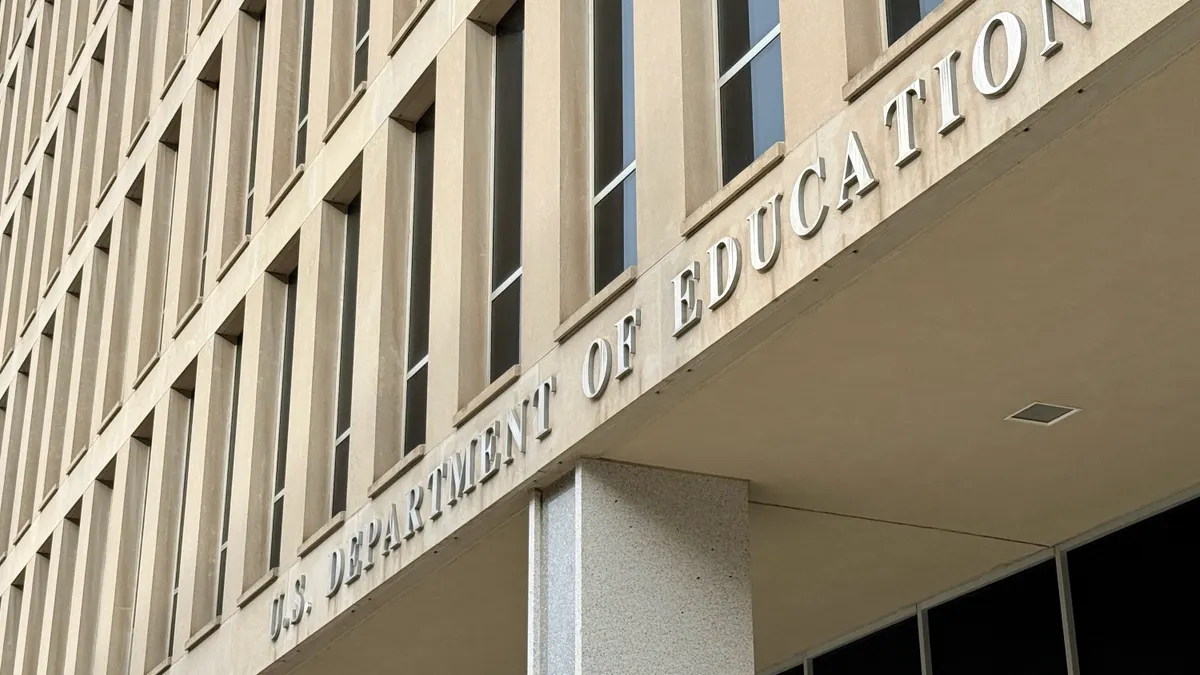
- The U.S. Department of Education released a proposed rule Wednesday to overhaul the accreditation system to carry out key pillars of the Trump administration’s higher education policy agenda.
- The proposed rule, which is to be published in the Federal Register on Thursday, would give accreditors significant new duties, such as ensuring colleges have policies to prioritize intellectual diversity among faculty and protect civil and free speech rights.
- Some higher education experts have warned that the federal government could use such regulatory language to undercut academic freedom on campus and stamp out lawful diversity, equity and inclusion initiatives.
Dive Insight:
In debuting its proposal Wednesday, Education Department officials said the overhaul would “break up entrenched accreditation monopolies.” They accused a small group of traditional accreditors of driving up college costs and pushing ideological agendas on campus.
“The Trump Administration’s proposed changes to the accreditation system are intended to reorient our quality assurance framework so that accreditors prioritize student outcomes rather than bureaucratic processes or the promotion of divisive and unlawful ideological agendas,” Under Secretary of Education Nicholas Kent said in a Wednesday statement.
The Council for Higher Education Accreditation, which represents accreditors and colleges, pushed back on the Education Department’s characterization of the accreditation system. CHEA, in a statement Wednesday, argued that the administration’s stance does “not reflect the complexity, diversity, and record of American accreditation.”
CHEA also warned against “undue federal prescription,” adding that certain provisions in the proposal “raise serious questions about the scope of federal oversight.”
The Education Department’s proposal comes after it reached consensus in May with a committee of higher education representatives on new regulatory language. This process, which is required for certain regulatory proposals, is known as negotiated rulemaking.
Because the Education Department reached consensus with those negotiators, it was largely bound to adhere to the agreed-upon language.
Wednesday's proposal is meant to carry out the policies outlined in President Donald Trump’s executive order last year on accreditation. That order directed U.S. Education Secretary Linda McMahon to streamline the process for recognizing new accreditors and called for accrediting agencies to require colleges to maintain intellectual diversity among their faculty. It also took aim at accreditor DEI standards.
Under the proposed rule, new accreditors could gain recognition from the Education Department much more quickly than before. Currently, accreditors must have conducted accrediting activities for at least two years unless they’re affiliated with or part of an already recognized agency, but the Trump administration’s proposal would eliminate that requirement.
The Education Department’s proposal would replace that requirement with other criteria, such as being legally established “to operate in the relevant jurisdiction,” having accreditation standards and operating procedures, and having received an application for accreditation from at least one college or program.
Accreditors would also have to ensure that colleges have policies “designed to support, promote, and appropriately prioritize intellectual diversity and the free exchange of ideas amongst faculty.” The proposal would carve out an exception to this requirement for religious colleges.
In a July post, policy experts at the Center for American Progress, a left-leaning think tank, called this language “vague and ambiguous.”
The center argued the Trump administration could use that provision to “threaten accrediting agencies with loss of federal recognition unless they begin to more closely and carefully police the ‘range of academic perspectives’ expressed on campus.”
In the regulatory proposal, the Education Department said this requirement was not meant to “prescribe specific institutional policies or override institutional autonomy, but rather to ensure that sufficient consideration is given to ensuring intellectual diversity is present on campus.”
Under the proposal, accreditors also couldn’t have standards that require colleges to “provide any preferences on the basis of race.”
The CAP authors suggested that this section was part of larger Education Department efforts to “subvert and weaponize” civil rights law.
“These regulations may spur colleges and universities to further cut initiatives and affinity groups that foster belonging and inclusion, moves that would undermine safe campus environments and harm the academic performance, retention, and mental health of all students,” they wrote.
The Education Department will accept public comments on the proposal through Sept. 21, after which a final rule will be formulated.