

Dive Brief:
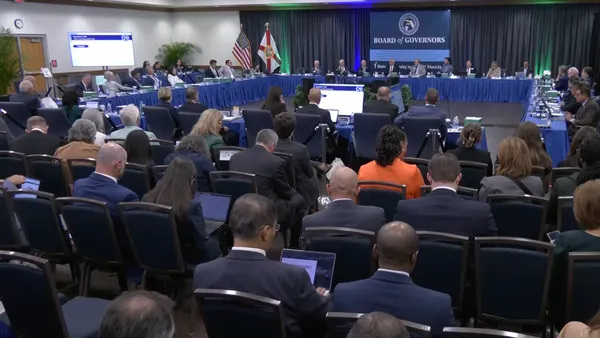
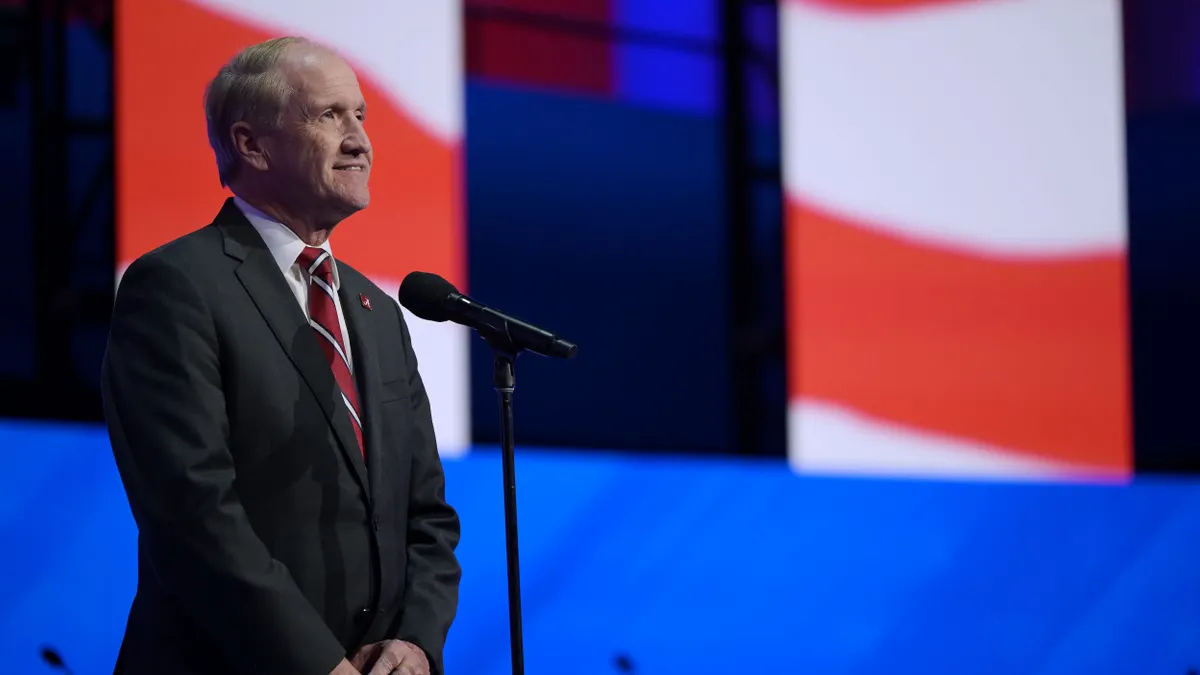
- The Florida Board of Governors on Wednesday voted by a wide margin to approve Stuart Bell as the University of Florida’s permanent president despite right-wing attacks on his past supervision of diversity initiatives while leading the University of Alabama.
- The UF governing board selected Bell as the sole finalist for the presidency in May and installed him as interim president in June. The temporary position came after the Board of Governors delayed a vote on his permanent appointment.
- Bell’s appointment as UF’s 14th president is effective immediately. He is set to start at a base salary of $2 million a year, with bonuses of up to 15% of his salary for the second through fifth years of his term if UF hits short- and long-term goals set by the university board, according to his contract.
Dive Insight:
UF has been without a permanent president for nearly two years, since former President Ben Sasse abruptly stepped down due to his wife’s illness. The search for a leader has been mired in politics and controversy. But it has ended, finally, with Bell’s appointment.
During Wednesday’s meeting, Bell said one of his top priorities as president would be to fill a number of leadership vacancies at UF, including the provost spot and several dean positions.
UF’s board of trustees lauded Bell’s record at Alabama. That includes 13% enrollment growth over a decade, along with increases in degrees granted, research spending and fundraising, and three NCAA D1 football titles, according to an informational packet presented to the board of governors on his candidacy.
“Everywhere we looked, we heard the same thing: He listens, he builds consensus, he develops great people, he expects accountability, he leads with humility, he leads with integrity, and he earns the trust of those around him,” Chair Morteza Hosseini said of Bell at Wednesday's meeting.
UF’s board of trustees unanimously approved Bell as interim president last month. That vote came despite Board of Governors Chair Alan Levine delaying Bell's confirmation at the state level, citing concerns over the UF board’s compliance with governance regulations. The UF board disputed those concerns.
In the background, a right-wing campaign has played out, calling for Bell’s rejection over his past support of diversity, equity and inclusion initiatives while he served as president at the University of Alabama.
For example, Nicole Neily, founder and president of conservative advocacy and legal group Defending Education, said in a May 18 social media post that UF was making a “big mistake” in choosing Bell. “Stuart Bell is nothing more than a ‘marquee name’ to them. “To the rest of us, he’s a DEI activist.”
Bell addressed the issue directly during the Board of Governors meeting Wednesday.
“I'm not coming to Florida to bring DEI or woke back to the state of Florida,” he said. Bell added that the University of Alabama had a long history of diversity efforts and he was expected to continue them as president there.
Had the Board of Governors rejected Bell, he would have been UF’s second presidential choice nixed by the state body since Sasse’s resignation.
Before Bell, UF picked former University of Michigan President Santa Ono as its sole finalist and recommended his approval to the Board of Governors. But amid a conservative backlash over Ono’s DEI efforts and handling of protests at U-M, the Board of Governors last June rejected him for the job — an unprecedented move.
The state’s Democratic party chair, Nikki Fried, derided the governors’ decision in a public statement at the time.
“No qualified candidate will consider coming to Florida now that our system is politicized, merit is condemned, and only loyalty to Republicans is rewarded,” she said.
Unlike Ono, Bell had Republican Gov. Ron DeSantis’ public endorsement.