Dive Brief:
- A federal judge dismissed the Trump administration's lawsuit over Minnesota laws allowing some undocumented college students to pay in-state tuition rates and qualify for scholarships at the state's public colleges.
- In June, the U.S. Department of Justice sued the Minnesota Office of Higher Education — along with Gov. Tim Walz and Attorney General Keith Ellison — over allegations that the state violated federal law by illegally offering undocumented students benefits not available to all U.S. citizens.
- But U.S. District Judge Katherine Menendez dismissed the case Friday, ruling that Minnesota's laws offer the same benefits to both citizens and undocumented residents and that federal immigration law does not preempt the state's contested statutes.
Dive Insight:
An undocumented student is eligible for Minnesota in-state tuition rates and state financial aid if they attended a state high school for at least three years and graduated from high school or earned a GED in Minnesota. State law also requires these students to apply for lawful immigration status, but because there is no federal pathway specifically for undocumented students, Minnesota officials have waived that requirement.
Meeting these criteria also allows undocumented students whose families make less than $80,000 a year to qualify for the state’s North Star Promise Scholarship, which covers any remaining tuition and fees at public colleges after all other aid has been applied.
The Trump administration argued that those policies conflict with immigration law. Specifically, the DOJ pointed to a federal statute barring states from giving undocumented students access to higher education benefits based on in-state residency if those benefits aren’t available to out-of-state U.S. citizens.
In Minnesota, officials argued that eligibility for in-state tuition is not determined by residency.
"Any student that attends and graduates from a Minnesota high school is eligible, and non-Minnesota residents (both citizens and noncitizens) may qualify," they said in their motion to dismiss. "Moreover, Minnesota makes U.S. citizens eligible for the same benefits without regard to their residence."
For example, students who had graduated from a Minnesota high school but had since moved out of state would still be eligible. The same held true for out-of-state students attending a Minnesota boarding school, the defendants argued.
Menendez agreed.
"While these criteria certainly require some connection to Minnesota, they do not require Minnesota residency," she wrote. She also ruled that the DOJ did not have standing to name Walz or Ellison as defendants in the case.
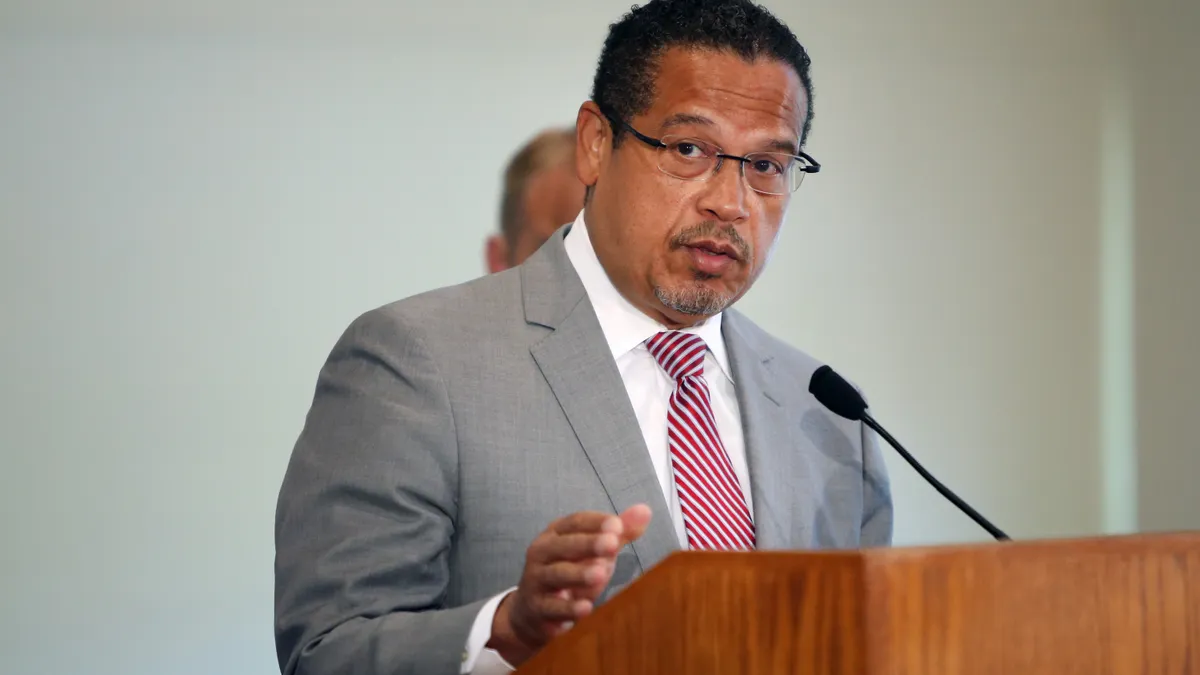
In a Friday statement, Ellison said the contested laws represent an investment by the Minnesota Legislature "to do everything we can to encourage a more educated workforce."
“Today, we defeated another one of Donald Trump’s efforts to misconstrue federal law to force Minnesota to abandon duly passed state laws and become a colder, less caring state," he said.
The DOJ did not immediately respond to questions Monday.
The agency has sued or is currently suing six other states over similar laws and policies: California, Illinois, Kentucky, Oklahoma, Texas and Virginia.
Menendez's decision is the first time a federal court has ruled against the Trump administration in one of these lawsuits. In the cases brought against Texas and Oklahoma, courts struck down their laws related to in-state tuition benefits for undocumented students after Republican state officials sided with the agency.