Northwestern University on Friday agreed to pay $75 million to the Trump administration over three years and make policy changes in exchange for regaining access to roughly $790 million in federal research funding.
The Chicago-area university also agreed to provide the federal government with detailed admissions data, end diversity statements in hiring, and ask international applicants why they’re seeking to study in the U.S, among other requirements. And the university canceled an agreement struck with pro-Palestinian protesters last year to end their five-day encampment on campus.
Interim Northwestern President Henry Bienen cast the agreement with the Trump administration as necessary to restore the private university’s federal research funding and avoid costly litigation. But critics accused the university of bowing down to government overreach.
With the pact, Northwestern becomes the sixth institution to publicly enter a deal with the Trump administration to have its federal research funding restored. The deal also closed three federal agencies' investigations into the university.
Northwestern has been financially reeling since April, when the Trump administration froze vast sums of federal research funding over claims that the university hadn’t done enough to protect Jewish students from antisemitism. Shortly after the grants were frozen, Northwestern said it would self-fund the research.
Over the past seven months, that’s translated into about $40 million each month, Bienen said in a video message Friday.
“If our frozen federal research funding had continued, it [threatened] to gut our labs, drive away faculty and set back entire fields of discovery,” Bienen said. “Litigation would likely have taken years to work its way through the legal system.”
Columbia University, Brown University, Cornell University, the University of Pennsylvania and the University of Virginia have also struck deals with the Trump administration, with some along similar terms as Northwestern's.
Harvard University, on the other hand, sued the Trump administration over roughly $2.2 billion in frozen research funding. A federal judge handed the Ivy League university a victory in September, ruling the Trump administration violated the university’s constitutional rights and didn’t follow proper steps when it froze the funding.
Did Northwestern get ‘essentially blackmailed’?
Democratic officials at both local and federal levels criticized the agreement this week.
The Trump administration “essentially blackmailed” the university into “bending to its will,” said Daniel Biss, mayor of Evanston, Illinois, where Northwestern's main campus is located, in a Monday statement.
“I am alarmed that the Trump administration is apparently finding success in its continued campaign to undermine the principles of freedom of speech and academic freedom that make our very democracy function,” said Biss, who is running to represent Northwestern’s congressional district in the House.
Maryland Sen. Chris Van Hollen, a Democrat and outspoken critic of the Trump administration, slammed Northwestern for striking the deal.
“We must keep calling out those that cave to the Trump Admin, and the latest is Northwestern,” he said in a social media post Monday. Van Hollen specifically criticized the university for reneging on the deal it struck with pro-Palestinian protesters.
“Throwing your students under the bus to please Trump. Shameful,” he added.
Andrew Gillen, an education research fellow at the Cato Institute, a libertarian think tank, said that while the agreement is better than the other deals the Trump administration has struck with colleges, it suffers from a “fundamental flaw.”
“The main problem with the settlement is that the university was punished via the withholding of previously awarded research funding before it was proven to be guilty,” Gillen said. “But real justice requires proof of guilt before a punishment is imposed."
U.S. Attorney General Pamela Bondi, however, heaped praise on the deal.
“Today’s settlement marks another victory in the Trump Administration’s fight to ensure that American educational institutions protect Jewish students and put merit first,” Bondi said in a statement on Friday. “Institutions that accept federal funds are obligated to follow civil rights law — we are grateful to Northwestern for negotiating this historic deal.”
What’s in the deal?
Bienen on Friday stressed that the deal preserves the university’s academic freedom, with officials pointing to a provision that says the agreement does not give the federal government control over the university’s hiring, curriculum, research or admissions.
Nonetheless, the university did agree to wide-ranging policy changes.
Northwestern, for instance, agreed to terminate the 2024 Deering Meadow Agreement that it had struck with pro-Palestinian protesters, along with all of the resulting policy changes.
That agreement promised to create spaces specifically for Middle East, North African and Muslim students on campus. In the agreement, the university also said it would work with students to provide additional support for Jewish and Muslim students through Northwestern’s student affairs division.
Northwestern said it was terminating the agreement, including by no longer offering those designated campus spaces.
It said, however, that it will continue certain initiatives mentioned in the Deering Meadow Agreement, as they predate that deal.
Under the Deering Meadow agreement, for instance, the university promised to financially support “visiting Palestinian students and scholars at risk.”
When announcing the deal with the Trump administration on Friday, it said it would continue its at-risk scholars program because it began formally participating in 2022, though it did not say whether it would change which regions it focused on.
The university did not immediately respond to a request for more information about the at-risk scholars program and other matters on Monday.
Northwestern also plans to hire a third party to conduct a survey to see how students, including Jewish students, assess the campus climate. The survey will ask whether students feel welcome on campus and safe reporting antisemitism. And the university will continue to provide mandatory antisemitism training for all new students and employees.
Also under the deal with the Trump administration, Northwestern promised to enforce policies it introduced in September 2024 to tighten its protest rules. Those include bans on overnight demonstrations, protests in academic buildings, and displays such as banners outside of designated areas.
Another provision of the agreement concerns admissions data. According to the deal, the university has already provided the Trump administration with “historical” admissions data broken down by race, ethnicity, GPA and standardized testing performance. And it promised to publicly post such data for both admitted and rejected students annually over the next three years.
When announcing the deal, Northwestern said it would remain committed to supporting transgender students. These students have “agency to choose how they identify themselves and the pronouns they use,” the university said.
However, the university agreed to provisions in the deal that use definitions of sex and gender outlined in one of President Donald Trump’s executive orders. That order declared that the federal government would only recognize two immutable sexes, male and female, based on reproductive cells at conception. Medical experts have criticized the order for running contrary to scientific understanding of sex and gender.
The university will use those Trump administration definitions in providing single-sex housing to women who request such accommodations, as well as providing “all-female sports, locker rooms, and showering facilities.”
Northwestern said students can select single-sex or mixed-gender housing options.
The university and its medical school also agreed to not provide gender-affirming care, including hormone treatments and surgeries, to transgender minors. In a statement, the university said it has never provided gender-affirming surgeries to transgender minors. It did not say whether it had previously provided hormone treatments.
The agreement also contains provisions regarding international students.
Northwestern agreed to review its policies for admitting international students and to ask them questions “designed to elicit their reasons for wishing to study” in the U.S. It will also develop training materials to “socialize international students to the norms of a campus dedicated to free inquiry and open debate.”
The university will also analyze its business model to determine “whether steps are necessary” to decrease its reliance on international enrollment. Over 4,900 international students attended Northwestern in the 2023-24 academic year, making up 25% of the university’s full-time enrollment, according to institutional data.
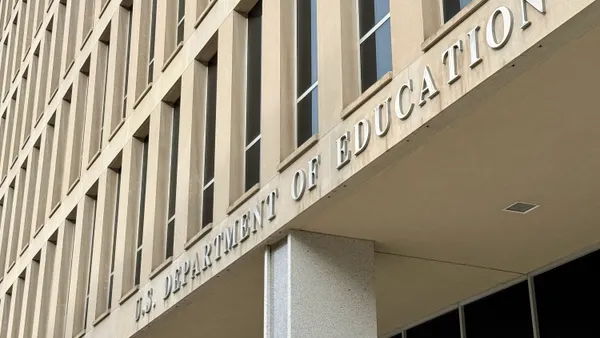
Additionally, Northwestern agreed to train its civil rights, Title IX, admissions and human resources staff using the U.S. Department of Justice’s sweeping July guidance. That directive threatens to pull federal funding from institutions that have diversity, equity and inclusion initiatives that the Justice Department deems illegal.
As of Friday, Northwestern no longer requires diversity statements for either hiring or promotions. These statements typically explain a candidates’ experiences with and commitments to serving diverse populations, though conservatives often accuse them of being political litmus tests.