Most-clicked story of the week:
La Salle University President Daniel Allen spoke with Higher Ed Dive about the private institution's successful efforts to address its enrollment struggles and get on the path to financial stability. "We’re not trying to chase R1 or R2 status," he said. "We’re really focused on students, student success, and what happens in the classroom."
Number of the week: $140M
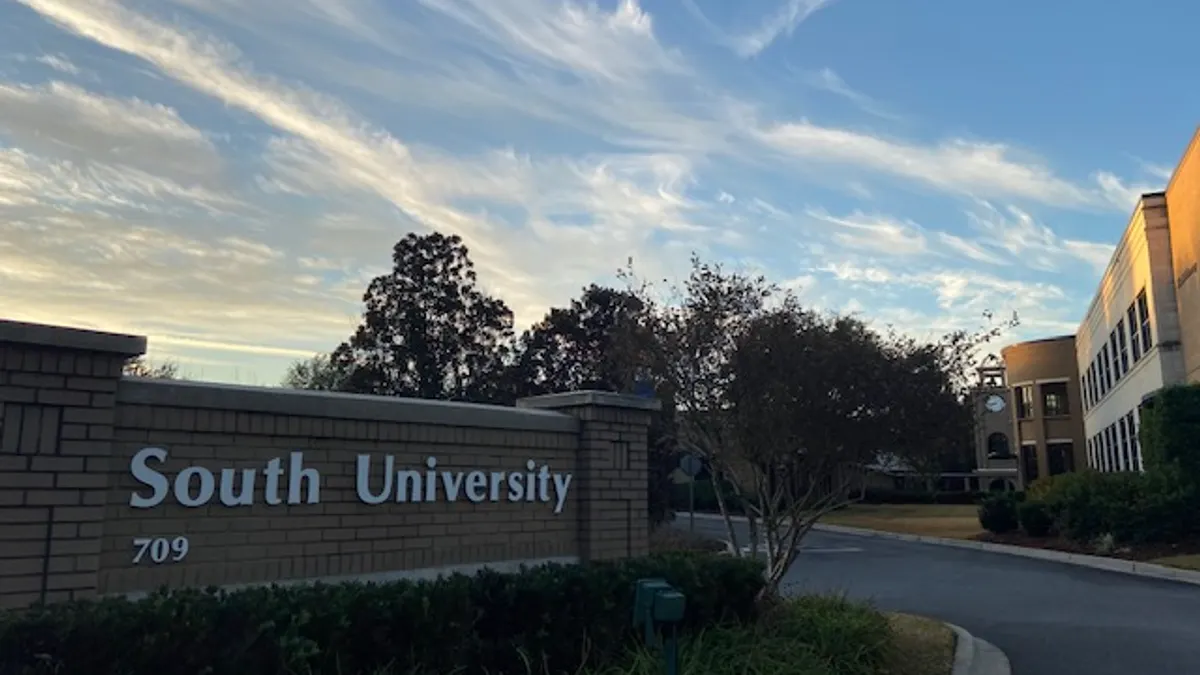
The price Perdoceo Education, a for-profit college operator, could pay to acquire South University. The acquisition could finalize as early as April, pending regulatory and accreditor approval.
The latest legal developments in higher ed:
- A state court last week ordered Antioch University and the Coalition for the Common Good to enter mediation. The university is suing the coalition, which it co-founded, in a bid to maintain its independence.
- A federal judge ruled that the U.S. Military Academy at West Point cannot bar civilian faculty from sharing personal opinions while teaching or require them to get approval before speaking at certain outside engagements.
- The family of Charlie Kirk could sue Utah Valley University following the right-wing activist’s shooting death on its campus last September. Via their lawyers, family members argued that multiple security failures by the university contributed to Kirk's death.
Federal agencies eye rule changes:
- A federal judge paused the implementation of the U.S. Department of Homeland Security’s rule limiting international student visas to four years. In his decision, U.S. District Judge F. Dennis Saylor detailed several ways the agency violated the Administrative Procedure Act and said the higher ed groups suing over the rule are “likely to succeed.”
- DHS is considering a rule that would eliminate a 60-day grace period for H-1B visa holders to stay in the U.S. after losing their jobs. The window has historically allowed highly-skilled workers more mobility between jobs.
- The National Science Foundation said it will overhaul its grant selection and funding process to better align with goals laid out by senior White House officials in July. NSF staffers told Nature the changes could further cut discovery-focused research.
- An IRS proposal to strip private colleges of their tax-exempt status could significantly damage those institutions' ability to fundraise, according to an analysis from Moody’s Ratings. If colleges lost their status, they would also lose the ability to issue tax-exempt bonds, raising their borrowing costs.