The cost of college has become eye-watering for many students, driving sectorwide conversations about the value of higher education. But many institutions are quick to distinguish their tuition sticker price from what students actually pay.
Washington College, in Maryland, lists tuition at nearly $60,000 a year. But it says the average student pays less than half that, $28,000, for tuition, fees, housing and food a year.
The private liberal arts institution announced last month that it will cover tuition for new full-time students from Maryland whose families make $75,000 a year or less.
Washington College, in Maryland
Undergraduate Sticker Price: $58,704 for new students in 2026-27
Free tuition eligibility: Maryland students whose families make $75,000 a year or less
Large, well-heeled universities first popularized this kind of tuition pledge. But smaller colleges and those without massive endowments, like Washington, are increasingly turning to these kinds of affordability initiatives.
A recent Brookings Institution report found that many types of institutions — including public four-year colleges and those with large endowments — already award enough financial aid on average to cover tuition to students from households in the bottom quarter of the income distribution nationwide. The exception was private tuition-dependent colleges.
Additionally, Levine didn't find evidence free tuition policies made a big impact on net college prices for students at this income level.
"For many students, free tuition policies may function less as new aid than as a repackaging of existing aid into a more salient form," Phillip Levine, a senior fellow at Brookings and author of the report, said in the analysis. "While free tuition may not correspond to additional aid, these policies can help communicate to eligible students that they will not need to pay the full sticker price."
Free tuition based on family income
At least half a dozen colleges announced last month that they would offer no-cost tuition to certain students.
In Ohio, Denison University students entering in fall 2027 will pay nothing for tuition if their families make $100,000 a year or less. The liberal arts institution also announced a tiered pricing system for students that don't qualify for free tuition.
Denison University, in Ohio
Undergraduate sticker price: $74,000 for 2026-27
Free tuition eligibility: New students whose families make $100,000 a year or less
Families making just over $100,000 to $200,000 will pay no more than 5% of their income toward tuition. For those earning between $200,001 and $300,000, Denison will cap tuition at 10% of their income. Beyond that, students whose families make up to $400,000 annually will pay at most 15% of their income toward tuition.
The median household income nationwide was about $87,500 in 2025, according to U.S. Census Bureau data. Just 16% of U.S. households made $200,000 or more in 2024.
Before the initiative, Denison had already pledged to fully cover a student's demonstrated need.
Adam Weinberg, the college's president, framed Denison's new initiative as a way to bring transparency to its pricing. In a statement, he said families often don't know the extent of aid they could receive at Denison and that the new program "provides clarity earlier" in the application process.
Some small institutions have launched state-specific versions of these programs.
Starting with its fall 2027 entering class, Earlham College will guarantee that Indiana students pay no tuition if their annual household income is $100,000 or less. Newberry College has the same offer for first-time and transfer students from South Carolina.
Earlham College, in Indiana
Undergraduate sticker price: $56,784 for 2026-27
Free tuition eligibility: New Indiana students whose families make $100,000 a year or less
Newberry College, in South Carolina
Undergraduate sticker price: $29,400 for 2026-27
Free tuition eligibility: New and transfer on-campus students from South Carolina whose families make $100,000 a year or less
Newberry specified that its initiative is a last-dollar aid program, meaning it will cover the remaining cost of tuition after a student's federal and state aid and scholarships are applied.
The $100,000 cut-off for both offers could cover large swaths of the population in both states. In Indiana, the median household income in 2024 was just under $72,000, according to Census data. In South Carolina, it was just over $69,000.
Wellesley College, in Massachusetts, and Middlebury College, in Vermont, each announced free tuition programs last month. Wellesley set its income cap at $200,000 while Middlebury will extend the offer to new students whose families earn $175,000 or less annually. The colleges had endowments worth $3.2 billion and $1.7 billion, respectively, in fiscal 2025, NACUBO and Commonfund data shows.
Middlebury College, in Vermont
Undergraduate sticker price: $72,924 in 2026-27
Free tuition eligibility: New students whose families make $175,000 a year or less
Wellesley College, in Massachusetts
Undergraduate sticker price: $72,570 in 2026-27
Free tuition eligibility: Students whose families make $200,000 a year or less
The endowments of most of these colleges surpass the national median of $253.6 million, according to data from Commonfund and the National Association of College and University Business Officers.
But they are still significantly smaller than those at the private universities that popularized the free-tuition model.
In contrast, Harvard University had an endowment worth $55.7 billion in fiscal 2025. In 2004, the institution began covering tuition and room and board for students whose families made $40,000 or less annually. Harvard has since raised that cap to $100,000. Families who make $200,000 or less a year do not have to pay tuition.
Likewise, Princeton University, which has offered free tuition, room and board to students from households making $65,000 or less since 2016, had an endowment worth $36 billion. Princeton has since upped the offer's income cap to most families earning $100,000 or less.
Institutions that limited their free-tuition policies by residency as well as household income had the smallest endowments of the group. Washington College had a $350 million endowment in fiscal 2025, while Earlham's endowment was $427.8 million the same year, according to NACUBO and Commonfund.
Tuition resets
Other small colleges are overhauling their sticker prices altogether. This move, known as a tuition reset, typically sees a college slash its published price to an amount more in line with what the average student pays and commensurately decrease the institutional aid it awards.
Carroll College said last month that it will cut its listed tuition by 40% to $26,800 in the 2027-28 academic year. Based on its sticker price, the Catholic institution is currently the most expensive college in Montana, it said in the announcement.
Carroll College, in Montana
Original undergraduate sticker price: $44,712 for 2026-27
New undergraduate sticker price: $26,800 for 2027-28
Like colleges pursuing the free tuition model, Carroll said its tuition reset is meant to show prospective families that attendance is more financially attainable than they may think.
"The new model gives families a clearer understanding of Carroll’s cost, making it easier to compare their college choices and see Carroll as a realistic option," the college said in its announcement. "A more transparent starting point also allows families to explore financial aid and plan for college with greater confidence."
Carroll will continue to offer scholarships and financial aid, though at a level calibrated to its new price. On its website, the college said that the tuition reduction would not necessarily result in current students paying less and noted that the average institutional aid package it awards to full-time students already takes about 45% off its listed price.
Carroll will also eliminate its general student fees for undergraduates, which are about $1,450 a year.
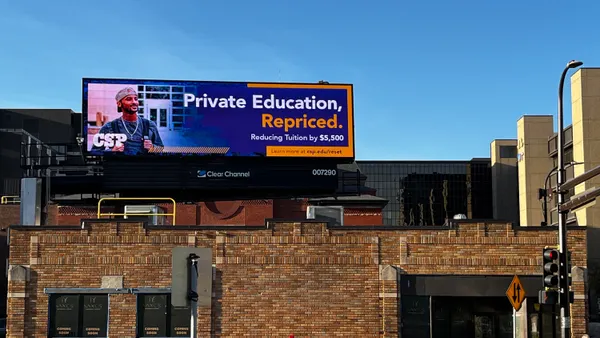
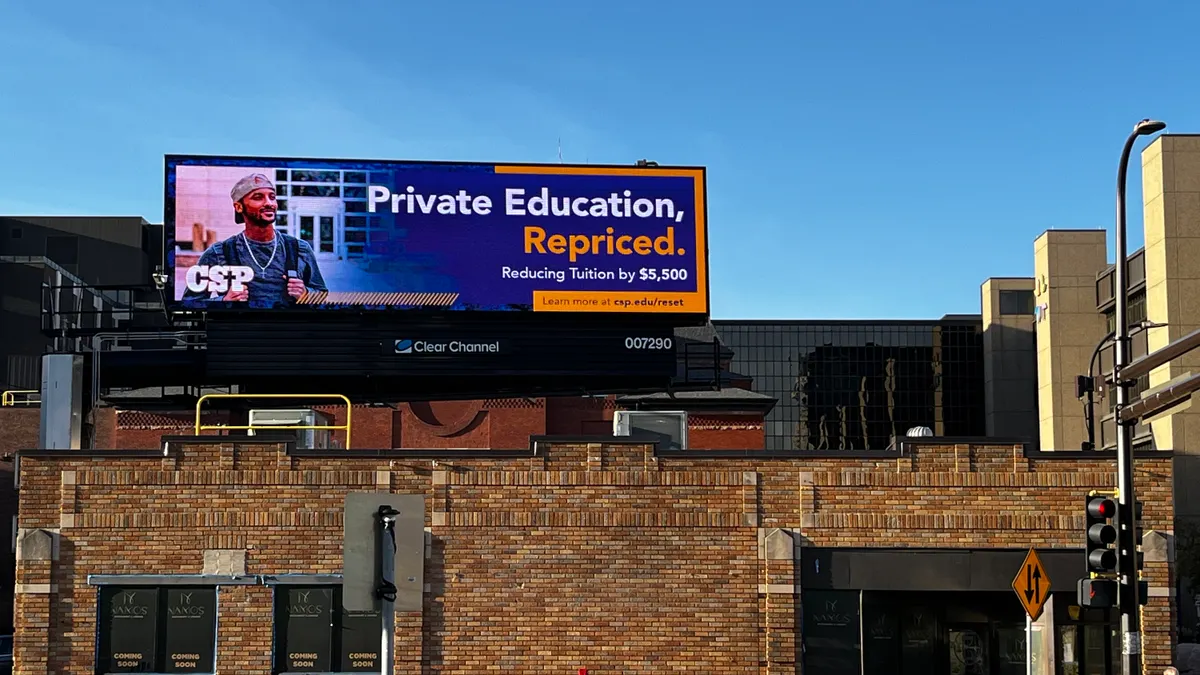
Concordia University St. Paul, in Minnesota
Original undergraduate sticker price: $27,200 for 2026-27
New undergraduate sticker price: $21,700 for 2027-28
In Minnesota, one college is resetting its tuition for the second time in under 15 years. Concordia University St. Paul will cut its sticker price by about 20% in the 2027-28 academic year. Its new published tuition price, $21,700, will match what it was in the 2007-08 academic year and be about 40% less when adjusted for inflation, according to the college.
Concordia cited its first tuition reset, in 2013, as a driving force behind the enrollment growth it experienced in the years that followed — up 98.9% from 3,018 students in fall 2012, the year before the reset, to 6,003 in fall 2024, according to federal data.
Coe College, in Iowa
Original undergraduate sticker price: $58,780 for 2026-27
New undergraduate sticker price: $31,850 for 2027-28
In neighboring Iowa, Coe College will also slash its sticker price by nearly 46% to $31,850 for the 2027-28 academic year. The liberal arts college already caps direct costs — which include tuition, housing and meals — for in-state students at about $25,600 in a bid to compete with Iowa's public universities.
Other college affordability initiatives
Beyond broad free tuition promises and sticker price resets, a handful of colleges have announced other types of affordability initiatives.
In Connecticut, Trinity College is going hyperlocal. The liberal arts college will provide free tuition and room and board to students from the surrounding city of Hartford, which has about 122,000 people. Just over 22% of locals 25 years and older hold a bachelor's degree, according to Census Reporter.
Trinity College, in Connecticut
Undergraduate sticker price: $72,820 for 2026-27
Policy: Full ride for locals
Less than 100 miles west, Marist University announced it will cap annual tuition and room and board costs at $32,000 for new students from New York if their families make $200,000 a year or less.
Marist University, in New York
Undergraduate sticker price: $50,760 for 2026-27
Policy: New students from New York whose families make $200,000 a year or less
The university said the program is designed to give "eligible New York families access to a private university education at a price competitive with New York’s leading public universities" — a nod to the State University of New York system.
The median household in New York made about $80,000 in 2023, according to the Federal Reserve of New York, though income varies significantly across the state. In Long Island, for example, that number was 63.4% higher at $131,000.
Even so, roughly 83% of New York families would qualify for Marist's plan, according to data from Census Reporter.
And beginning fall 2027, Carleton College, in Minnesota, will eliminate loans as part of its financial aid packages. It is the first in the state to do so, according to the liberal arts college, and joins the ranks of just a handful of institutions, including Dartmouth College and Princeton and Harvard universities.
Carleton College, in Minnesota
Undergraduate sticker price: $75,186 for 2026-27
Policy: No loan as part of financial aid packages
Despite its annual tuition sticker price over $75,000, Carleton says that families receiving need-based aid paid an average of just under $22,000 in 2026-27.