

Dive Brief:
- The University of Michigan is looking to buy a roughly 140-acre campus from Concordia University Ann Arbor for $60 million.
- If a sale proceeds, CUAA — which opted to wind down the large majority of its programs in 2024 — said it would offer the remaining academic programs at its separate campus roughly three miles away.
- U-M CFO Robert Hewlett recommended the purchase, which is expected to close by the end of June and is subject to due diligence and environmental review. The university’s board plans to vote on the acquisition on Thursday.
Dive Insight:
U-M’s potential purchase of CUAA’s property could be read as symbolic of the times, as large public universities frequently grow their student ranks and financial power while smaller private colleges struggle to compete.
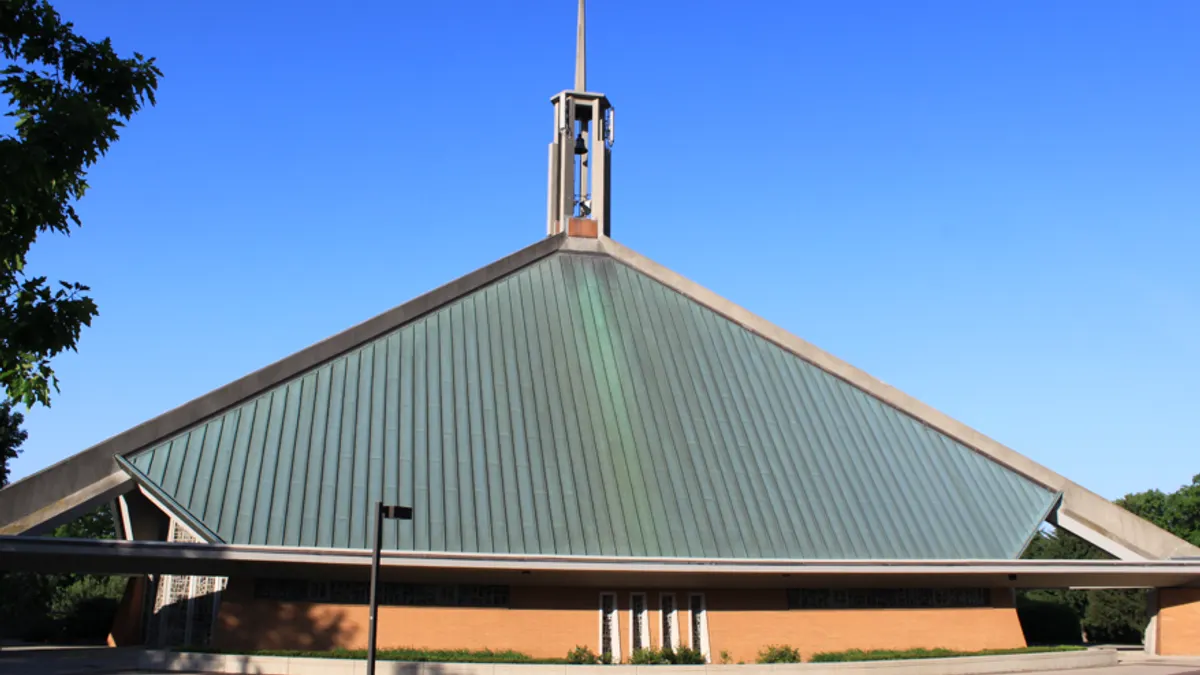
If the sale is approved, U-M would acquire new administration buildings, classrooms, residence halls, athletic facilities, a historic manor and a chapel.
The purchase — to be made using U-M’s financial reserves — would “further the university’s mission and its options for future development,” Hewlett said in a board meeting document.
CUAA officials approached U-M earlier this year, asking the university to consider taking over the property and expressing “a desire that the campus continue to serve educational purposes,” according to Paul Corliss, U-M’s assistant vice president for public affairs.
U-M officials haven’t yet specified how the university would use the CUAA property.
“The university will evaluate how the site may support long-term educational, research or health-related priorities consistent with its mission,” Corliss said in a statement emailed to Higher Ed Dive on Tuesday. “As one of the world’s leading research universities and health systems, U-M plans decades in advance to ensure it has the space and capacity needed to support evolving academic, research and community needs.”
In an FAQ page about the sale, CUAA said its board determined that “continuing to operate the Geddes Road property would require resources that could not be responsibly sustained over the long term.”
Selling the property “enables Concordia to focus resources on sustaining high-quality academic programs and student experiences while addressing the financial realities facing higher education nationally,” the university said.
Ann Arbor’s city council has opposed the sale, however. In a resolution expressing concern over the move, city officials said they hoped the property would instead be used to add to Ann Arbor’s housing stock — and with it, the city’s tax base.
“The City Council urges the University of Michigan not to acquire the Concordia property making it at least theoretically possible that it could be shifted to the tax rolls,” the council said.
City officials noted that U-M has bought roughly 90 property parcels in Ann Arbor over 25 years. They calculate that has led to $2.4 million lost in annual property tax revenue for the city.
In his statement, Corliss said, “The university looks forward to working with local officials, neighbors and community stakeholders as this process moves forward.”
CUAA’s sale of the property follows the decision nearly two years ago to cut dozens of programs, shaving the university's offerings to fewer than 20. College officials made the decision as the institution wrestled with a multimillion dollar deficit. The Lutheran institution was taken over by Concordia University Wisconsin in 2013.
Its remaining programs would be taught on CUAA’s Plymouth Road campus, which currently houses its graduate healthcare and online programs, according to the university.
CUAA, like many other small private institutions, has seen its enrollment dip recently. Between 2023 and 2024, fall enrollment dropped 16% to 1,135 students. The decline came after enrollment had grown 15.3% at CUAA between 2019 and 2023.
Meanwhile, U-M’s fall enrollment rose 9.9% to 52,855 students between 2019 and 2024.