Haverford College leaders have agreed to a settlement with a group of Jewish students and faculty members who alleged that the private Pennsylvania institution hadn’t done enough to protect them against antisemitic harassment and discrimination, per a court filing last week.
Under the settlement, the college’s leaders agreed that Haverford’s policy would bar discrimination specifically against students and employees with Zionist views, as well as those who are Jewish or Israeli, according to The Deborah Project, a law firm that represented the plaintiffs.
The plaintiffs in the case had accused Haverford of violating civil rights law and breaching its contract with students. However, a federal judge dismissed their civil rights claim in 2025, ruling that many of the incidents they alleged created a hostile environment were protected by the First Amendment.
The Deborah Project said Haverford officials accepted several wide-ranging terms. Among them, the college agreed that it would bar discrimination against people with Zionist views, mandate annual antisemitism awareness training for all students and employees, and establish an antisemitism committee to advise the college’s president.
Campus officials will also require anyone wearing a mask or face covering on campus to provide their identification to them if requested. If a student or employee refuses, they will face disciplinary action.
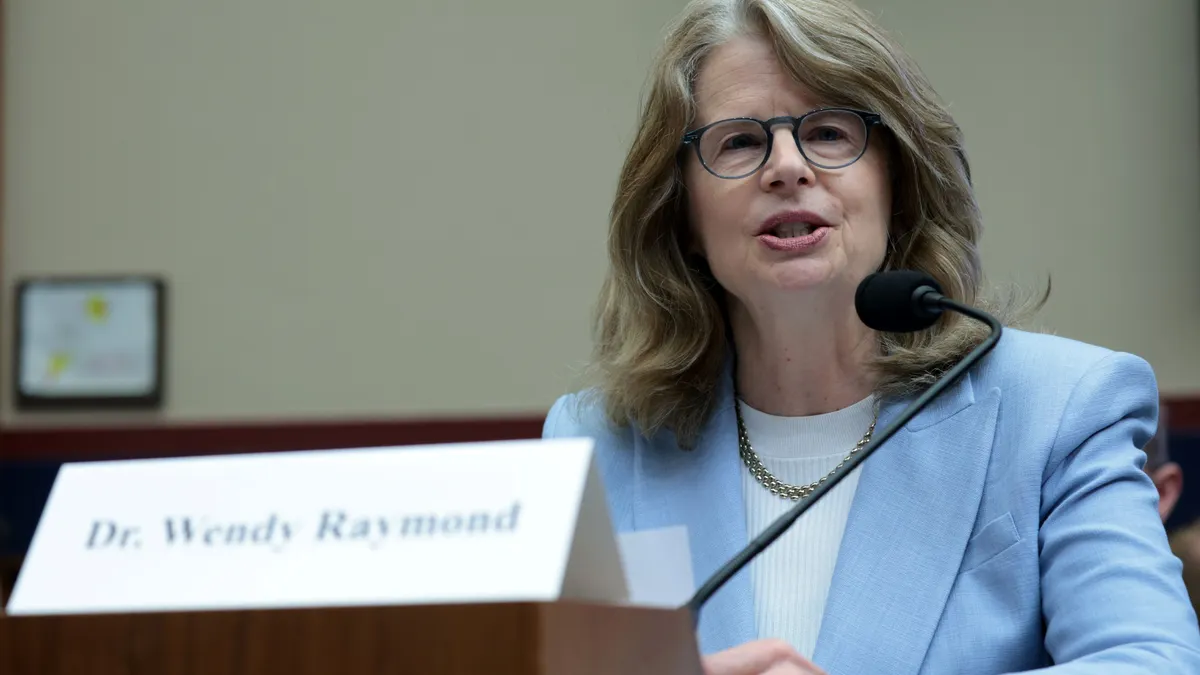
“Harassing, excluding, or seeking to silence Jewish community members on the basis of their beliefs, their commitment to Jewish observance, or any other element of their Jewish identity, including Zionism, is anathema to the College’s core principles of trust, concern, and respect,” Haverford President Wendy Raymond said Friday when announcing the settlement to the campus community.
Raymond said that while members of the campus community may “vehemently disagree with one another about the policies and actions of governments,” they must ensure those disagreements don’t “descend into the realm of discrimination, harassment, or bias.”
Ahmet Tekelioglu, executive director of the Council on American-Islamic Relations’ Philadelphia chapter, criticized the settlement in a Monday statement, arguing that “protecting Jewish people is not the same as protecting Zionism from criticism.”
“Haverford’s response creates a troubling precedent for academic freedom,” Tekelioglu said. “If opposing or criticizing Zionism can be characterized as discrimination against students who support Zionism, then legitimate political debate becomes vulnerable to institutional censorship.”
The Wall Street Journal’s editorial board lauded the settlement Sunday and slammed the college for the alleged incidents of antisemitism laid out in the lawsuit.
“It’s a shame it took a lawsuit for Haverford to admit its antisemitism problem,” the board wrote.
Under the settlement, Haverford will also bar professors from refusing to write students letters of recommendation “on the basis of students’ Jewish, Zionist, and/or Israeli identity,” according to The Deborah Project.
In their lawsuit, one of the issues the plaintiffs raised was with Tarik Aougab, a mathematics professor at Haverford, and his policy for students requesting letters of recommendation.
Aougab's policy states that, “as a matter of moral principle,” he doesn’t write letters of recommendations for students pursuing military or intelligency agency jobs, those involving policing or private weapons manufacturing, or jobs that would violate the US Campaign for the Academic and Cultural Boycott of Israel.
U.S. District Judge Gerald McHugh, in his June 2025 ruling dismissing the plaintiffs’ civil rights claims, pointed out that Aougab didn’t refuse to write letters of recommendations for Jewish students but rather for jobs associated with the state of Israel.
McHugh also wrote that the plaintiffs did not argue in their lawsuit that a Jewish student had ever sought out and been denied a letter of recommendation from Aougab for a position unrelated to Israel. Nor did they argue any student decided against seeking a letter from Aougab because they "felt that asking was pointless," he wrote.
“Whatever the merits of professorial boycotts, no facts are pled demonstrating that any Plaintiff faced a concrete negative educational impact,” McHugh wrote.
In a Monday email, Aougab said that he has never refused to write a letter of recommendation for a student based on their identity. “And never will I,” he added.
“If a student whose ethnic or religious background had nothing whatsoever to do with Israel but they wanted me to write a letter for them that would be in violation of the USACBI academic boycott, I would refuse,” Aougab wrote. “I would explain my reasoning to that student and work with them closely to see if there are any other opportunities they are interested in and for which I could write a letter.”
Aougab described the college’s settlement as a “capitulation” and said administrators “are geared far more towards risk aversion than they are towards moral, ethical, or intellectual considerations.”
What was in the lawsuit?
The plaintiffs include Jews at Haverford — a group composed of Jewish students, employees, alumni and parents who are committed to “the existence of Israel as a Jewish state” — as well as a handful of individual members who are current or former students.
Their legal challenge, first filed in 2024, alleged that Haverford had violated Title VI of the Civil Rights Act by being “deliberately indifferent” to a “severe and pervasive hostile antisemitic environment” on the campus. Title VI bars federally funded colleges from discriminating on the basis of race, color or national origin.
McHugh initially dismissed their case in early 2025 but allowed the plaintiffs to refile. Their amended 129-page complaint detailed numerous incidents at Haverford that they said created a hostile educational environment.
For instance, posters advertising two Jewish community events — “a Shabbat dinner and a discussion of Jewish identity,” according to the lawsuit — were torn down, including those that were located inside. After Jewish students asked college officials to investigate the incident, they said their investigation was “inconclusive” and said the wind was the likely culprit, according to the complaint.
The lawsuit also pointed to a protest encampment erected on Haverford’s campus, alleging that demonstrators had posters that called “for the destruction of the State of Israel.” The plaintiffs argued that college administrators did nothing to address “the overt hostility” of the demonstrators.
After plaintiffs filed their second complaint, McHugh again determined that it failed to meet the standard of a Title VI claim.
“While Plaintiffs paint a picture of a stressful campus climate for Jewish students, many of the incidents pled fall within the protection of the First Amendment,” he wrote that June.
McHugh also said the tearing down posters of only Jewish events would constitute an antisemitic act. “Absent, however, are any allegations that this incident resulted in deprivation of educational benefits,” he wrote.
However, McHugh allowed the plaintiffs’ breach of contract claim for nominal damages to proceed. The plaintiffs alleged that Haverford officials did not respond to their complaints, violating the policies laid out on the college’s website.
Only a few months later, McHugh agreed to pause the case as Haverford and the plaintiffs sought to resolve it outside of court.
Haverford has felt pressure from lawmakers over allegations of antisemitism on its campus. House Republicans grilled Raymond during a May 2025 hearing on campus antisemitism, with some threatening her campus’s federal funding. A few months later, the U.S. Department of Education opened an investigation into Haverford over allegations of antisemitism.
Raymond announced in November that she would retire in June 2027.