

Dive Brief:
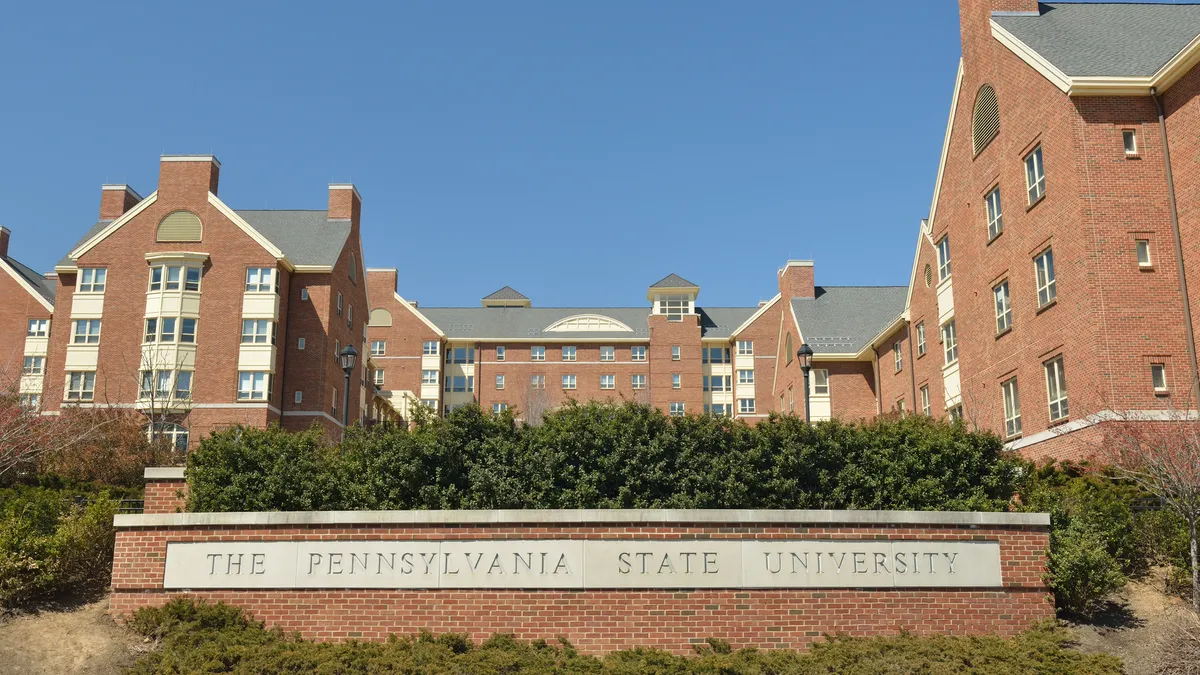
- Penn State University, Temple University and University of Pittsburgh are set to split a $10 million pot of performance-based funding, a new source of money for those institutions even as their base state appropriations have remained level since 2019.
- While a boost to overall funding, the figure is well below the $30 million Pennsylvania Gov. Josh Shapiro requested for the performance-based funding pool. Shapiro signed the $50.9 billion compromise budget package that included the funding on Sunday.
- Final allocations to the universities will be based on a state funding model that considers enrollment of Pennsylvania students, as well as metrics such as graduation rates, issuance of high-demand degrees and affordability.
Dive Insight:
In a state with relatively paltry public support, the performance-based funding pot is a longed-for increase at Pennsylvania’s state-related universities, which have more independence than the colleges in the Pennsylvania State System of Higher Education. That 10-university system received a little over $626 million, a roughly $5 million increase in funding, as well as additional funding for debt relief, according to The Philadelphia Inquirer.
Penn State, Pitt and Temple’s baseline appropriations remain flat in the budget bill. For Penn State, that figure is $242.1 million — a number effectively unchanged since fiscal 2020, according to the university. It’s also less than base state appropriation levels more than a quarter of a century ago, and that’s before accounting for inflation.
Penn state leaders lauded the additional boost. The university anticipates getting more than $4 million from the new performance funding pool.
"This initial investment is an important first step that recognizes the essential role higher education plays in strengthening our commonwealth," Penn State President Neeli Bendapudi said in a statement Sunday. "The metrics at the heart of this model align closely with Penn State’s mission and values."
Pitt’s appropriations have also remained flat for the past seven years. The university expected to get $7.5 million in additional support from the performance pot, but the lower $10 million pool dashed those hopes.
“Pitt is highly unlikely to receive three-quarters of that,” a post in the institution’s news service for faculty and staff noted. “It was unclear how that would impact the just-passed Pitt budget” that factored in a $7.5 million boost. A spokesperson added that the university has contingency plans to “minimize the impacts to our community.”
Temple, meanwhile, is trying to fill a budget hole that far exceeds whatever it might receive from the pool. Last week, university President John Fry said Temple would lay off around 40 employees as it works toward balancing its budget within three years. That makes fiscal 2027 the second year in a row that Temple has reduced its workforce as it navigates elevated costs and the impact of enrollment declines.
The state’s performance funding pool was created through Senate Bill 315, which was enacted in November but wasn’t funded until now. Before then, state lawmakers passed a bipartisan bill in 2024 creating the Performance Based Funding Council, which issued a report last May with recommendations on designing and distributing the pool.
Pennsylvania’s state support of colleges has been among the very lowest in the country on a per student basis. In 2025, the state spent $7,227 on each full-time equivalent student — well short of the $12,082 U.S. average and making it the fifth lowest-spending state in the country, according to the latest State Higher Education Finance report.