Dive Brief:
- Policies used by the Trump administration to deport legal immigrants because of their speech are unconstitutional, a federal judge ruled Friday.
- The Trump administration has revoked hundreds of student visas and sought to deport noncitizen students in the U.S. legally by invoking two provisions of the Immigration and Nationality Act.
- But in her decision last week, U.S. District Judge Noël Wise said the administration's use of INA policies in many cases violated the First Amendment and due process rights. “In the United States, freedom of speech belongs to the people," Wise said. "It is not the government’s to take."
Dive Insight:
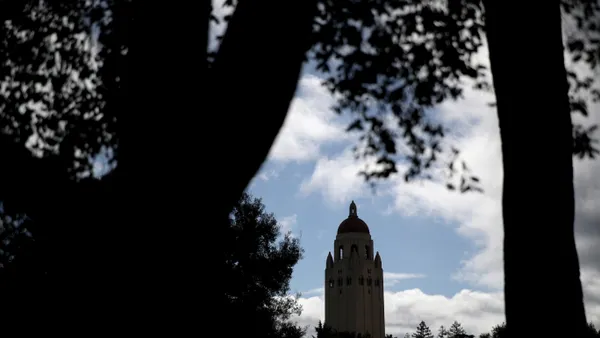
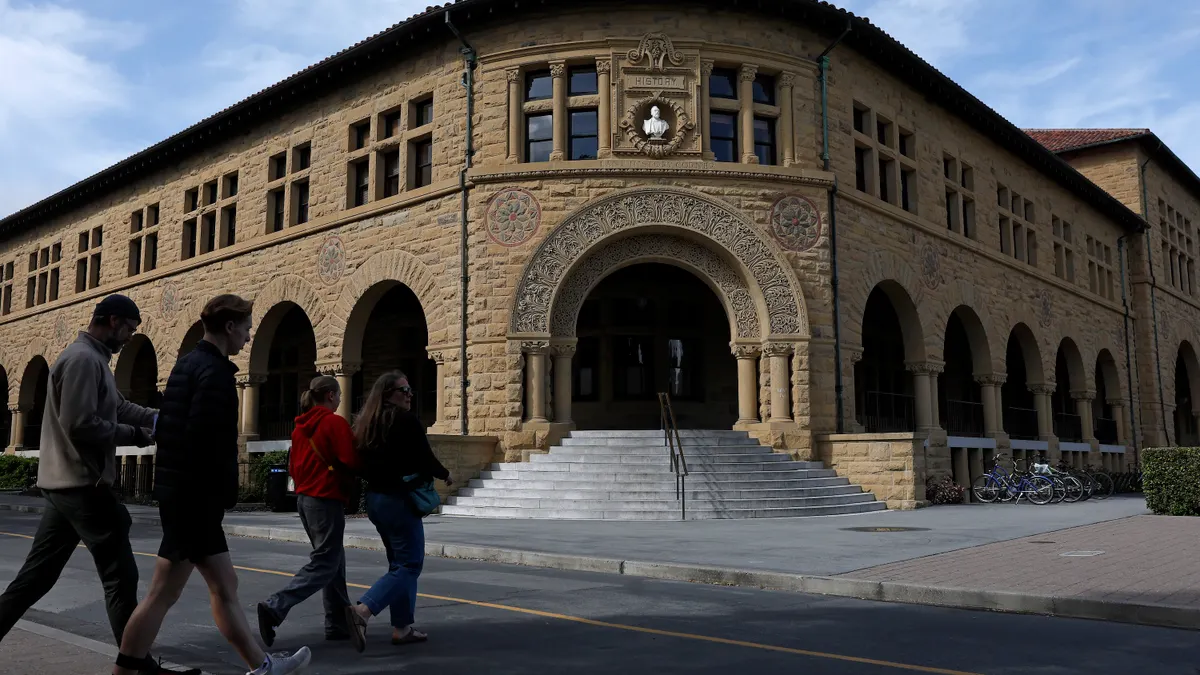
Last August, Stanford University’s independent student newspaper sued top Trump officials, arguing that the administration was unconstitutionally deporting those it deems to have “anti-American or anti-Israel” views, creating a “pall of fear” that is “incompatible with American liberty.” Free speech and due process rights apply to all people in the U.S., not just American citizens.
Early in President Donald Trump's first year back in office, his administration began targeting noncitizens studying at U.S. colleges, citing the INA. Under the act, U.S. Secretary of State Marco Rubio can revoke student visas and deem a noncitizen eligible for deportation if their statements or associations “compromise a compelling United States foreign policy interest.”
Some of the most high-profile cases include students such as Mahmoud Khalil and Rümeysa Öztürk who participated in pro-Palestinian campus protests or published commentary criticizing Israel in the wake of the Israel-Hamas war.
In its complaint, The Stanford Daily said student visa holders at the publication have said no to covering stories related to the conflict out of concern that it would endanger their immigration status. Other international students asked to have their articles taken down or quit the newspaper altogether, while still others on campus largely stopped speaking to student reporters on the record or at all.
Wise sided with the plaintiffs.
“Free speech, including the freedom to criticize the government and its leaders, is not a sign of our democracy’s fragility,” she wrote in her decision. “It is evidence of its strength. That strength is diminished when members of our society — citizens and noncitizens alike — must self-censor and ‘behave’ or suffer the government’s retaliation.”
The judge also noted the government has targeted people over their speech related to Trump's peace deal negotiations with Iran and regarding right-wing commentator and political organizer Charlie Kirk following his murder on Utah Valley University’s campus last year.
"Tomorrow, or perhaps even today, targets may include anyone in the United States who exercises their freedom of speech to simply express opinions the government does not like," she said. "This downward spiral is antithetical to our Constitution that recognizes our right to speak freely."
In addition to infringing on students' free speech rights, the Trump administration's policies are unconstitutionally vague and violate the Fifth Amendment, Wise ruled. The State Department left noncitizens to guess at what conduct could result in their deportation, resulting in self-censorship, she wrote in her decision.
George Porteous, editor-in-chief of the Stanford Daily, praised the decision on Saturday.
"The reporters in our newsroom shouldn't have to fear that writing a story will result in their deportation," Porteous said on social media. "The Court’s decision will enable our reporters to focus on what they do best: asking tough questions and reporting the truth."
He thanked other student newsrooms that supported The Stanford Daily and the Foundation for Individual Rights and Expression, which represented the publication.
The U.S. departments of State and Homeland Security on Monday did not immediately respond to questions about the decision and if the federal government intends to appeal.