

Most-clicked story of the week:
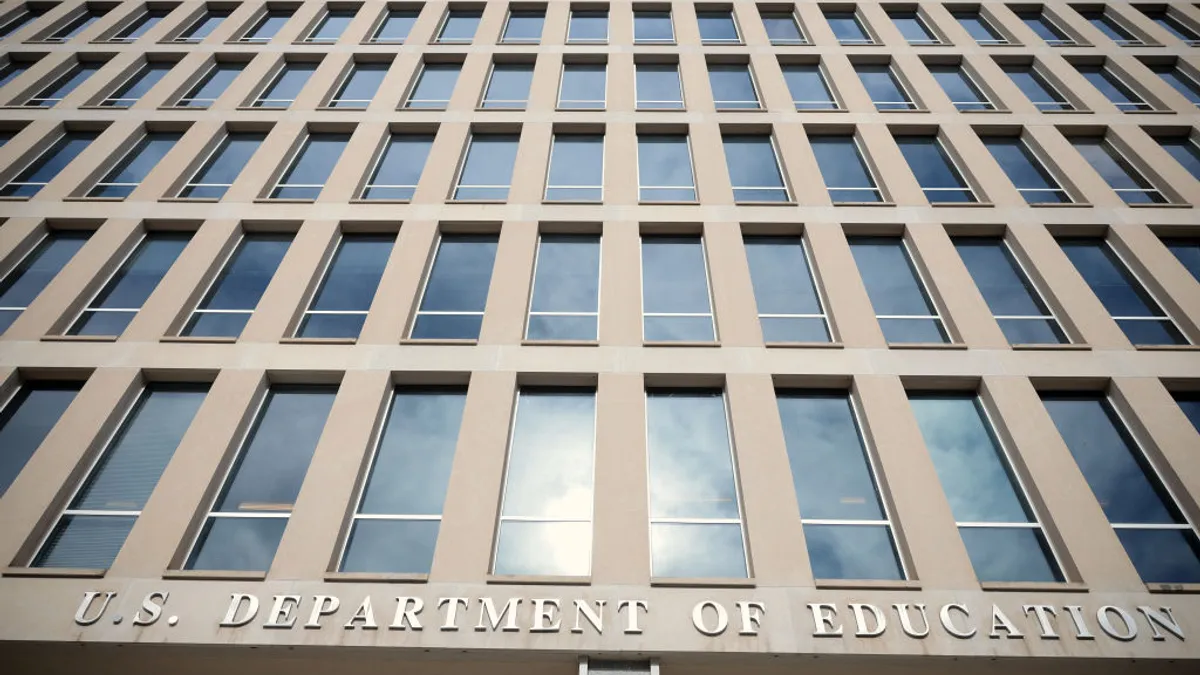
U.S. Department of Education staff recommended that the American Bar Association’s Council of the Section of Legal Education and Admissions to the Bar lose its federal recognition as an accreditor.
Department staff said the accreditor has not met over two dozen criteria. The council, however, defended its record through a spokesperson. The Education Department's move adds to a long-running political campaign the Trump administration has waged against the ABA.
Number of the week: $430,000
That is how much Broward College is set to pay former President Torey Alston through a mutual separation agreement. Just two weeks ago, the college’s board had planned to vote on firing Alston without cause, which would have left him without severance. But Alston won a court order blocking the vote until he and the board attended mediation. Broward Chief Operating Officer Rabia Azhar was named acting president of the Florida public institution.
Education Department, student journalists file appeals in high-profile cases:
- On Thursday, the U.S. Department of Education appealed a federal district court ruling against regulations limiting the organizations whose employees qualify for public service-related student loan forgiveness. The Education Department’s rule, released last fall, barred employees at organizations it deemed to have “substantial illegal purpose” from participating. But the Council of Nonprofits and others swiftly sued, arguing that the Trump administration had “weaponized” the forgiveness program “in a way that defies how Congress designed it.”
- Student editors at the University of Alabama appealed a federal judge’s decision not to order the institution to reinstate magazines it shuttered suddenly earlier this year. University leaders said the magazines — one geared toward women students, another toward Black students — posed a risk given the Trump administration’s campaign against diversity and inclusion initiatives. Student journalists sued, arguing the canceled funding violated their First Amendment rights.
- Five highly selective colleges got the green light to appeal the class action status of an antitrust lawsuit alleging they engaged in tuition price-fixing. If the case proceeds as a class action, the colleges could potentially face legal liabilities totaling at least $1.7 billion, they said.
MIT, University of Chicago and Florida colleges grapple with AI use:
- A Massachusetts Institute of Technology committee said the university must revamp its governance procedures to allow rapid curriculum changes that can respond to artificial intelligence’s capabilities. The committee’s report found that AI can “provide reasonable responses to almost any written assignment” at the undergraduate level. They recommended more in-class writing and instructor check-ins on projects, among other things.
- The Florida Department of Education plans to consider a rule in September that would require the state’s public colleges to adopt policies addressing AI on campus. The goal of such policies would be to “provide for the use and limitations of use” of AI tools “to ensure quality of education for students, efficiency of operations, and a safe learning environment for the whole college community.”
- Meanwhile, both faculty and students in University of Chicago social sciences core classes will be banned from using AI per a new departmental policy, according to the student paper Chicago Maroon. The guidance reflects a strong consensus “that our sequences are best understood as a pedagogical setting without AI,” according to a division memo obtained by the Maroon.