Dive Brief:
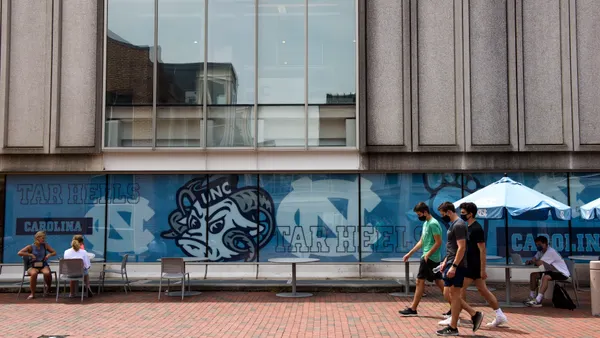
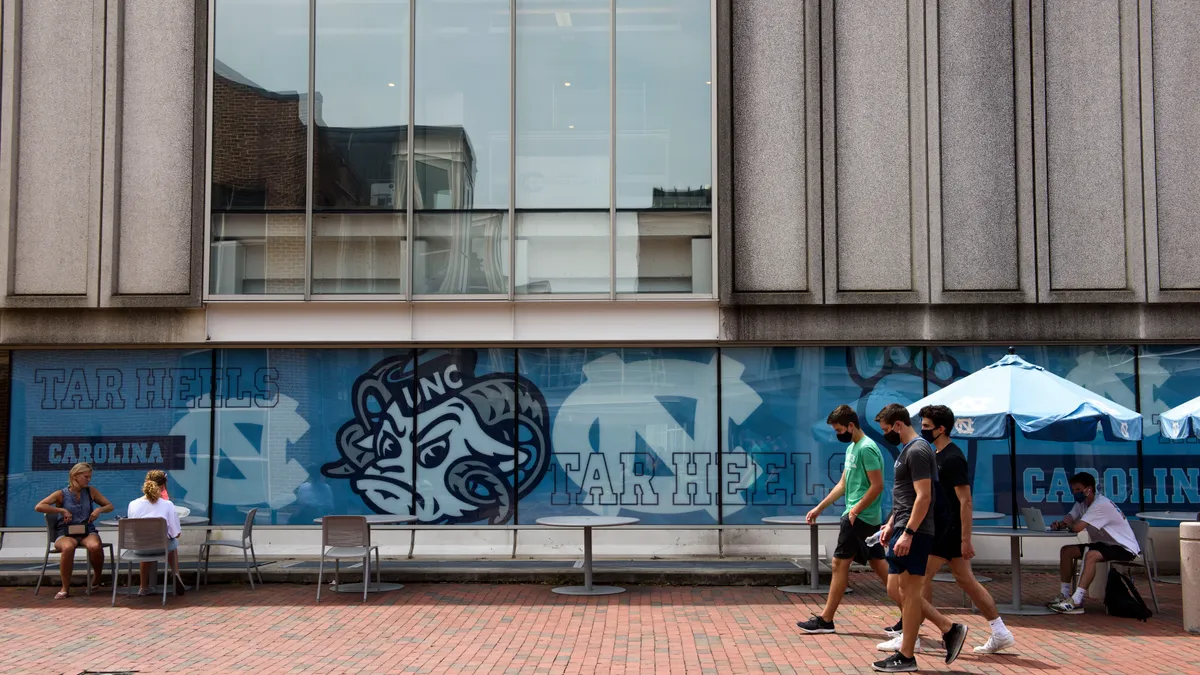
- The University of North Carolina at Chapel Hill on Monday struck a deal with the Trump administration to end federal investigations into its handling of alleged campus antisemitism and civil rights violations.
- Under the terms, the highly selective public flagship will share with the federal government years’ worth data on civil rights complaints and adopt new policies, ranging from admissions changes to student activity oversight. In exchange, the U.S. departments of Justice and Education will end more than a dozen active civil rights probes into the university.
- UNC-Chapel Hill did not admit wrongdoing under the agreement, and the federal government said it does not intend to dictate the "content of academic speech or curricula" at the university. Unlike most of the deals the Trump administration has struck, UNC-Chapel Hill will not pay a monetary settlement.
Dive Insight:
UNC-Chapel Hill faced 18 active Title VI investigations from the Education Department dating back to 2019, "spanning the Biden and Trump administrations," according to the university. Title VI bars institutions that receive federal funding from discriminating on the basis of race, color or national origin.
Since April 2025, the DOJ's civil rights division had also been conducting an 18-month compliance review into the university’s admissions.
Under Monday's deal, which is in effect through December 2028, the Trump administration will close all of the probes, and the university's access to federal funds will continue, according to both parties.
In return, the settlement requires UNC-Chapel Hill to:
- Within 90 days, share all complaints of alleged Title VI violations against students and employees, along with the university's response, from Oct. 7, 2023, to Oct. 19, 2026.
- Make quarterly reports to the DOJ on complaints of alleged Title VI violations against students and employees, along with the university's response, through December 2028.
- Where possible, eliminate opportunities for admissions officials to learn an applicant's race or other federally protected characteristics.
- End and prohibit partnerships with recruitment programs that seek to serve as a "bridge" or "pipeline" for students based on any protected characteristic.
- Ensure scholarships, affinity groups, student centers, graduation ceremonies and other programming "do not unlawfully segregate, exclude, limit, disadvantage, or discriminate against any candidate or participant” based on any protected characteristic.
- Ban programs that seek to achieve diversity targets or "race-based outcomes."
When it comes to admissions, the university isn't prevented from adopting “policies, practices, and processes that consider how applicants overcame adversity on a personal level," according to the settlement. “UNC may consider facets of family background, such as poverty or lack of educational attainment, so long as such considerations are not used inconsistently or deceptively” to advantage applicants based on their protected characteristics.
The deal also requires UNC-Chapel Hill to appoint a "Merit & Civil Rights Administrator" to enforce the terms and report quarterly to the DOJ, starting within 90 days. The university will finance the position and any needed staff.
In a FAQ released Monday, UNC-Chapel Hill said it expects costs for implementing the settlement's terms will be "consistent with ordinary operating expenses" because it has already taken many of the steps mandated by the deal. Elizabeth Hall, associate vice chancellor for university compliance, will fill the administrator role while staying in her current position, the university said.
The agreement also implements several policies related to student demonstrations and on-campus protests.
UNC-Chapel Hill was one of dozens of colleges that saw pro-Palestinian protests beginning in spring 2024. In one instance, the university sought to ban multiple demonstrators from campus over allegations of trespassing, but a federal judge struck down that decision in February.
Under the settlement's terms, UNC-Chapel Hill will bar people from wearing masks to conceal their identities, with "reasonable exceptions," and require anyone wearing a mask on campus to provide identification when requested by university officials. The university will also be required to consistently enforce its antidiscrimination and anti-harassment policies as they apply to demonstrations.
UNC-Chapel Hill Chancellor Lee Roberts said the deal "reinforces our commitment to the fair and equal treatment of everyone at Carolina."
“For at least a decade, through different presidential administrations, U.S. universities have faced heightened public scrutiny across a range of issues," he said in a Monday statement. "We’re proud to resolve those issues at Carolina in a way that protects our mission and affirms the civil rights of everyone in our community."
If the Trump administration determines UNC-Chapel Hill has violated the deal, the university will have 15 days to get back on course. Failing that, it would have to enter into and pay for a formal mediated settlement with the federal government.
"The Civil Rights Division commends UNC for its cooperation in meeting its obligations under federal law without the need for litigation; we hope other institutions will take note and do the same," Harmeet Dhillon, assistant attorney general for the DOJ’s civil rights division, said in a Monday statement.
Admissions at UNC-Chapel Hill has been a hot-button topic for years. The institution, along with Harvard University, was the defendant in the landmark 2023 U.S. Supreme Court decision banning race-conscious admissions policies.
Like Harvard, UNC-Chapel Hill is highly selective. It accepts 17% of applicants, according to U.S. News & World Report. Part of the DOJ's terms on Monday included ensuring the North Carolina institution is complying with that Supreme Court ruling — something UNC-Chapel Hill says it is already doing.
The Trump administration has now struck seven settlements with colleges, trading policy changes in exchange for terminating civil rights investigations and the threat of lost federal funds.
In August, a federal whistleblower testified to Congress that the probes behind two of those deals — with Columbia and Brown universities — were politically motivated. Federal officials pressed Columbia administrators to make a deal despite conducting hasty or incomplete investigations, according to the whistleblower. And they sought a deal with Brown even after concluding they lacked evidence to pursue a formal civil rights violation, the former DOJ attorney said.