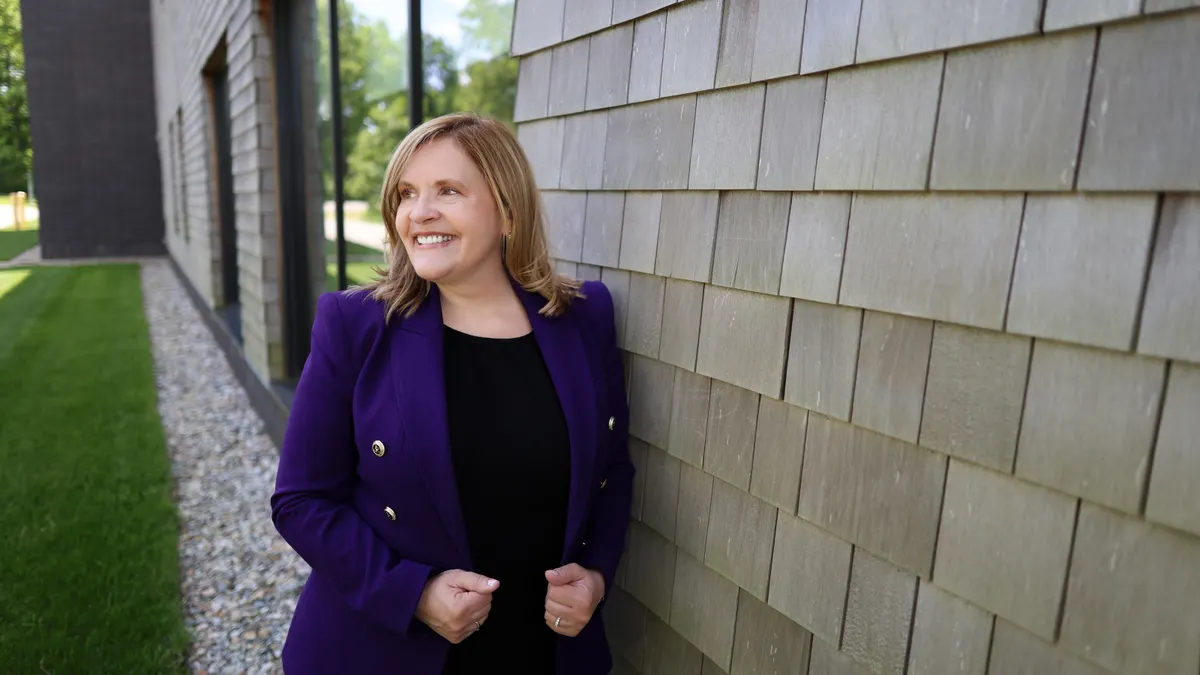
In December 2023, Southern New Hampshire University’s board unanimously selected Lisa Marsh Ryerson as the institution’s next president. Ryerson, SNHU’s then-provost and a former trustee, previously served as president of Wells College for 18 years before leading the AARP Foundation for almost nine years.
Ryerson’s appointment followed Paul LeBlanc’s decision that month to step down at the end of the academic year. He had led the private nonprofit as president and CEO for two decades, during which time SNHU evolved into a sectorwide leader in online education and dramatically grew its student body.
"SNHU will be in very, very good hands," LeBlanc said of Ryerson during his last commencement as president.
Ryerson assumed the top role in July 2024, becoming only the sixth president in the university’s 90-plus-year history. The board initially hired her on a two-year term before extending her contract last August to 2030.
With her two-year anniversary coming up, Higher Ed Dive sat down with Ryerson to discuss taking over for a longtime and well-known president, how her history with SNHU helped her hit the ground running, and what advice she has for leaders in similar positions.
Editor’s note: This interview has been edited for clarity and brevity.
HIGHER ED DIVE: There were six months between when the board selected you as the university’s incoming president and when you stepped into the role. How did you and Paul LeBlanc use that transition period?
LISA MARSH RYERSON: SNHU’s transition was incredibly thoughtful and longer than most places have.
Over the course of my time at SNHU, Paul and I worked beautifully together, both on my insights for helping to lead the team and on the transition. When you form a relationship with a colleague over time, you can have clarity with one another.
A big part of being the provost, and then beginning to take on leadership of the executive team, was doing so at a time when Paul and I were right down the hall from one another. I was able to talk to a trusted colleague and ask, “Why were these decisions made?” I had been on the board, so I had pieces of the puzzle. But when you work within an organization, you see things in a new light.
That period of six months allowed me to not only sharpen my sense of my strengths and opportunities but to deeply listen to students, faculty and staff to understand what was on their minds.
I'm probably not the best one to comment on this, but I think it was really helpful for the community to see Paul and me side by side and to have that six-month transition. It wasn't an abrupt goodbye to a beloved leader.
Did you initially envision long-term plans for your presidential tenure?
The opportunity was first a two-year contract, which is a really great idea coming off of a longtime leader. I understood that was a discrete period of time for helping the community understand there would be another president at SNHU.
I initially didn't think about my leadership timeline beyond my first contract. I thought, “There is so much that is happening in American higher education and global higher education right now that I must make the most of 24 months with this team.” I felt the urgency of the moment. I fully leveraged the opportunity to keep learning from the community, including from Paul.
Then, we were rolling! It became clear that two years would not be enough, and so I signed on for five more years. I want you to know that I did so with a full-on happy dance.
What is one piece of advice LeBlanc gave you about leading SNHU?
Form relationships and listen deeply. I have always held that as a compass for me in my leadership journey, and his confirmation of that was meaningful.
University presidents or leaders of organizations don't have a lockdown on the best ideas. The way we get anywhere is together. Our employees and learners hold information and lived experiences about SNHU that are deeply important to making decisions.
What advice would you give to incoming presidents in a similar situation?
Listen and learn, always. Also, leverage the opportunity for individuals to see you as having a new and fresh perspective because that does open up dialogue.
Don't hesitate to form relationships with all the former leaders. They have had joyous days and sleepless nights. Their pathway will be different, and their telling of their journey is deeply informative for any leader. It's not just the honoring of that; it's the true desire to learn from it.
Even if it's not your first college presidency, you have to approach it fresh and be open to new learnings.
I had been out of higher education for almost a decade. Much had changed. And some things hadn't changed that I maybe wish had. So I had to approach the role with a fresh eye.
What would you say to those who are considering applying for or taking on a college presidency for the first time?
Do not be hesitant. If you're thinking about that role, reach out to permanent seated presidents. Talk with us. We will give you candid feedback. That pipeline has to continue to flourish and continue to diversify as it flourishes.
For example, I am aware that I stand on the shoulders of other great women. I make every effort to be sure I'm reaching behind and pulling others up onto my shoulders.