


Dive Brief:
- A federal bankruptcy judge last week approved the $5.4 million sale of Bacone College’s assets, including its campus, following the closure of the private Native American-serving institution last year.
- The buyer of Bacone’s assets is Oppenheimer Development Properties, a firm that says it is focused on the environment and land restoration.
- Bacone, in Oklahoma, initially filed for bankruptcy in 2024. In May 2025, a judge ordered the institution into liquidation after a U.S. bankruptcy trustee alleged “gross mismanagement” of the college’s finances.
Dive Insight:
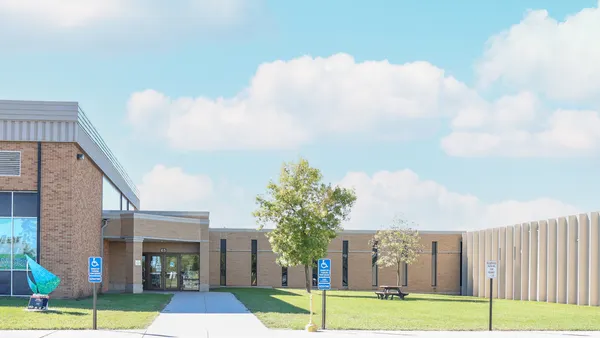
Along with Bacone’s campus, the sale includes two parcels of land that together total about 67 acres. It also includes a trove of books, archival materials, paintings and other artworks, many of them with significance to Bacone’s history and Native American communities.
ODP and its CEO, Reed Oppenheimer, did not immediately respond to questions Tuesday about the firm’s plans for the Bacone property and other assets.
The real estate firm has made efforts to get certain “significant buildings” of Bacone’s onto the National Historic Registry, according to court testimony recounted in the judge’s order.
The property also has a small cemetery. Oppenheimer must provide “reasonable access to those wishing to visit a grave site,” the judge wrote.
The order approving the sale came over the objection of a former Bacone professor who raised numerous concerns, including that the Muscogee Nation might have a claim to the land under a 19th century treaty. The judge wrote that testimony and documents provided to the court confirmed the legal transfer of land that ultimately came under Bacone’s ownership.
Bacone — originally named Indian University — began teaching classes in a Baptist mission house in 1880.
In the early 20th century, the institution deepened its focus on Native American education, recruiting Native staff and faculty and developing classes in Native American culture. In the 1930s, Bacone established an arts center that developed a distinct aesthetic and expressive movement.
By the 21st century, some faculty members questioned the college’s commitment to Native American students and faculty. In its last years, only a handful of faculty were Native American, and its Native student makeup fluctuated widely, dipping to as low as about one-third in 2018.
Meanwhile, its financial issues mounted.
In fall 2023, Bacone had just 106 students, less than a tenth of the 1,184 students it enrolled in 2010. By February 2024, The Associated Press reported that the college was teetering on the edge of closure amid lawsuits, debts and the risk of accreditation loss. When visiting the campus, a reporter for the news service found buildings in disrepair, molding Native works of art and accusations that administrators had embezzled funds.
When Bacone initially filed for bankruptcy, leaders intended to keep the college open. But after a federal bankruptcy trustee found evidence of financial mismanagement, a judge ordered the college into Chapter 7 bankruptcy. That kicked off a court-managed liquidation of what was, until its closure, the oldest continuously operating college in Oklahoma.